Loading...
Women's Wellness12 min readUpdated
UTI statistics in women: recurrence rates, risk factors, and what actually works for prevention
50-60% of women will get at least one UTI in their lifetime, and 27% will have a recurrence within 6 months. Here is what the data says about causes, antibiotic resistance, and evidence-based prevention.

Written By
Dr. Sarah Jenkins
Board Certified OB/GYN

Medically Reviewed By
Dr. Emily Chen
Chief Medical Officer
Share
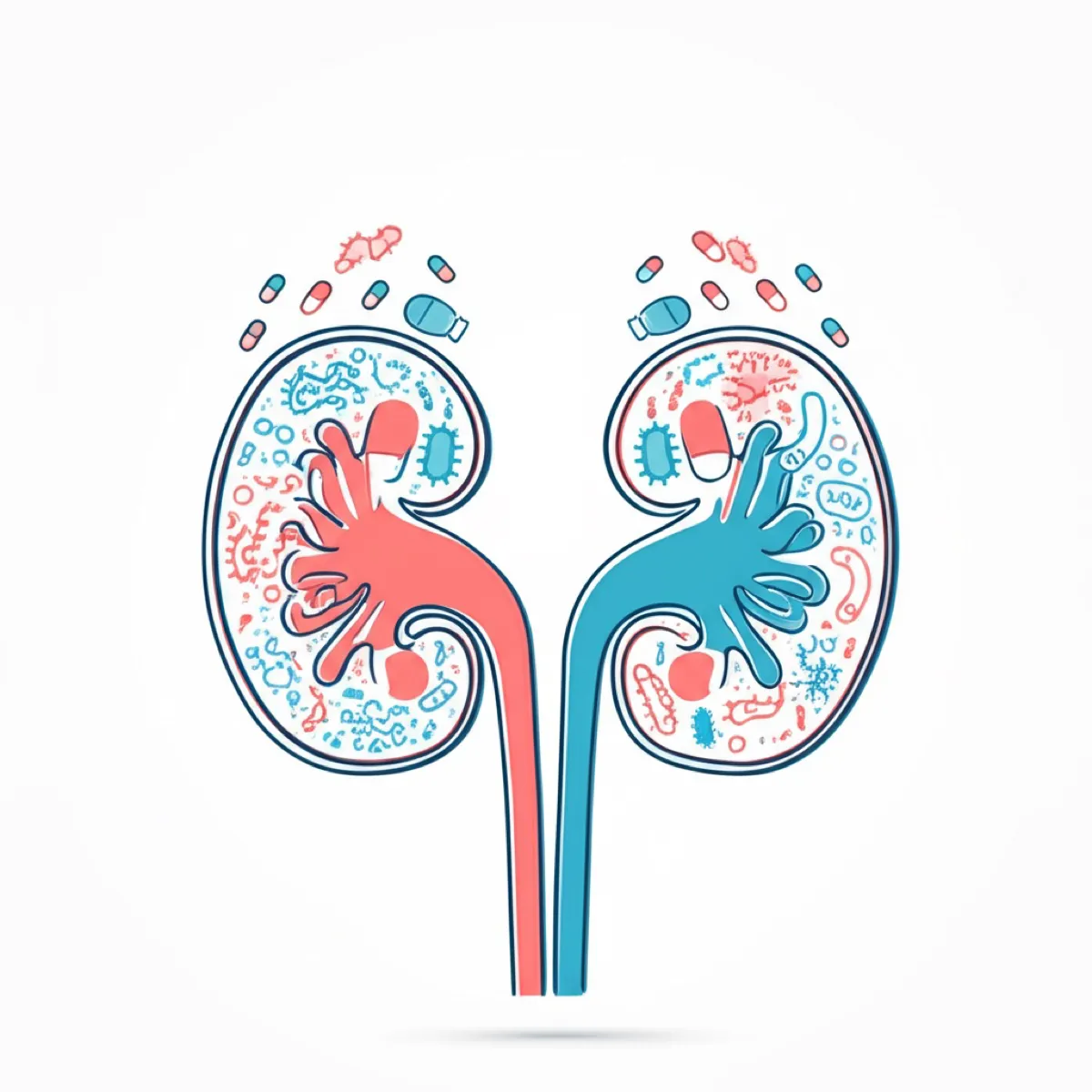
Last year, a 28-year-old patient came in for her fourth UTI in seven months. She had finished antibiotics each time. She drank water constantly, wiped correctly, and did everything the internet told her to do. She was frustrated and, honestly, a little embarrassed, as if recurrent infections were something she was causing. They are not. The data on UTI recurrence in women is remarkably consistent: once you have had one, the odds of getting another are high, and the reasons have far more to do with anatomy and microbiology than behavior.
Urinary tract infections are the most common bacterial infection in women worldwide. Between 50% and 60% of adult women will experience at least one UTI during their lifetime, according to a widely cited epidemiological review in Therapeutic Advances in Urology. That makes UTIs more common than any other bacterial infection women face, and yet they are still treated as routine annoyances rather than the significant, sometimes recurring medical problem they actually are.
Key takeaways
- Between 50% and 60% of women will experience at least one UTI in their lifetime, per epidemiological data reviewed in Therapeutic Advances in Urology (Medina & Castillo-Pino, 2019).
- Approximately 27% of women who have a UTI will have a confirmed recurrence within 6 months, and up to 44% within 12 months (Foxman, 2014).
- Women are roughly 30 times more likely than men to develop a UTI, primarily because the female urethra is about 4 cm long versus 20 cm in men.
- Escherichia coli causes 80% to 90% of uncomplicated UTIs, but antibiotic resistance in E. coli strains is rising globally, with WHO reporting resistance to trimethoprim-sulfamethoxazole exceeding 30% in many regions.
- A 2012 Cochrane review found modest evidence that cranberry products reduce UTI recurrence, but the effect size was small and compliance was a significant problem.
50-60%
of women will experience at least one urinary tract infection in their lifetime.
Medina & Castillo-Pino, Therapeutic Advances in Urology, 2019
50-60%
Women who will get at least one UTI in their lifetime
Medina & Castillo-Pino, 2019
27%
Recurrence rate within 6 months of first UTI
Foxman, 2014
30×
Higher risk in women vs. men
Hooton, NEJM, 2012
UTIs in women at a glance
- Lifetime prevalence
- 50-60% of women (Medina & Castillo-Pino, 2019)
- Primary pathogen
- E. coli causes 80-90% of uncomplicated cases
- Recurrence rate
- 27% within 6 months; 44% within 12 months
- Annual U.S. cost
- $3.5 billion (visits, prescriptions, lost productivity)
- First-line treatment
- Nitrofurantoin 100 mg BID × 5 days (IDSA)
- Key resistance concern
- TMP-SMX resistance >30% in many regions (WHO, 2024)
How common are UTIs in women
UTIs account for roughly 8.1 million physician visits per year in the United States. The majority of those visits are from women. Emergency department visits for UTI-related symptoms add another 1 to 2 million encounters annually.
Betsy Foxman, an epidemiologist at the University of Michigan, published what remains one of the most thorough analyses of UTI burden in a 2014 review for Infectious Disease Clinics of North America. Her data showed that among sexually active young women aged 18 to 24, the annual incidence of symptomatic UTI is approximately 0.5 to 0.7 episodes per person per year. That means if you put 100 college-aged women in a room, about 50 to 70 of them will have a UTI this year.
Globally, UTIs affect an estimated 150 million people annually, with women accounting for the large majority. The economic cost in the United States alone exceeds $3.5 billion per year when you include outpatient and emergency care along with prescriptions and lost productivity.
One thing that often surprises patients is how common UTIs are in older women. After menopause, the incidence rises again, with some studies reporting rates as high as 15% per year in women over 65. The reasons for this are hormonal: declining estrogen levels thin the vaginal and urethral tissue, reduce protective Lactobacillus populations, and change the local pH in ways that favor bacterial colonization.
Why women get UTIs more than men
The anatomy is the primary explanation, and it is not subtle. The female urethra is approximately 4 centimeters long. The male urethra is approximately 20 centimeters. That shorter distance means bacteria from the perineal and vaginal area have a much shorter path to the bladder.
Thomas Hooton, writing in the New England Journal of Medicine in 2012, estimated that women are about 30 times more likely than men to develop a UTI. This ratio holds across nearly every age group. Among adults under 50, UTIs in men are so uncommon that a male UTI typically prompts further investigation for structural abnormalities.
Sexual intercourse is a significant risk factor in premenopausal women. Mechanical activity during sex can push bacteria toward and into the urethra. Women who use spermicides or diaphragms have higher UTI rates because these products disrupt the normal vaginal flora. Oral contraceptives, by contrast, do not appear to increase risk.
Other anatomical and physiological risk factors include:
- A history of UTIs (the single strongest predictor of future UTIs)
- A new sexual partner within the past year
- A maternal history of UTIs, suggesting genetic susceptibility in bladder epithelial cell receptor expression
- Incomplete bladder emptying, which is more common in women with pelvic organ prolapse
If you track your menstrual cycle and notice that UTI symptoms tend to cluster at certain points, you are not imagining it. Hormonal fluctuations across the cycle affect vaginal pH and bacterial populations. Our period calculator can help you identify whether your infections correlate with specific cycle phases.
The recurrence problem
Recurrent UTI is defined as two or more infections within six months, or three or more within twelve months. By that standard, a substantial minority of women qualify.
Foxman's data showed that 27% of women who had a single UTI experienced a confirmed recurrence within six months. Within a year, the figure was 44%. Among women who already had two or more UTIs, the recurrence rate climbed further: roughly 50% to 60% would have another infection within six months.
| Group / timeframe | Recurrence rate |
|---|---|
| Within 6 months of a single UTI | 27% |
| Within 12 months of a single UTI | 44% |
| Within 6 months after 2 or more prior UTIs | 50-60% |
Source: Foxman B. Urinary tract infection syndromes: occurrence, recurrence, bacteriology, risk factors, and disease burden. Infectious Disease Clinics of North America, 2014.
Why does this happen? Several mechanisms are at play. Some E. coli strains can invade the cells lining the bladder, forming intracellular bacterial communities that antibiotics cannot fully reach. After treatment clears the acute infection, these reservoirs can re-emerge weeks or months later. This is not a reinfection from outside. It is a persistence of the original organism inside the bladder wall itself.
There is also a genetic component. Research has identified variations in toll-like receptor genes (particularly TLR4) that affect how the innate immune system responds to uropathogenic bacteria. Women with certain TLR4 polymorphisms mount a weaker inflammatory response, which means bacteria can colonize more easily. If your mother had recurrent UTIs, your risk is meaningfully higher.
Dr. Sarah Jenkins, OB/GYN
The psychological burden of recurrence is underappreciated. Women with recurrent UTIs report significant impacts on sexual activity and sleep, along with work attendance and overall quality of life. I have patients who plan their social calendars around their infection cycles. This is not a minor inconvenience. It is a condition that reshapes daily life.
A 2019 American Urological Association/Canadian Urological Association/Society of Urodynamics guideline on recurrent uncomplicated UTIs acknowledged this explicitly, stating that the condition "significantly impacts patients' quality of life and warrants a structured management approach."
Which bacteria cause UTIs
Escherichia coli is responsible for 80% to 90% of uncomplicated community-acquired UTIs. This is not just any E. coli. These are uropathogenic strains (UPEC) with specific virulence factors that let them adhere to the bladder wall, resist flushing during urination, and evade immune responses.
The remaining 10% to 20% of uncomplicated UTIs are caused by:
- Staphylococcus saprophyticus (5% to 15%, particularly in sexually active young women)
- Klebsiella pneumoniae (1% to 6%)
- Proteus mirabilis (1% to 5%)
- Enterococcus faecalis (1% to 3%)
In complicated UTIs (meaning infections in patients with structural abnormalities, catheters, or recent hospitalization) the bacterial spectrum shifts. Pseudomonas aeruginosa, Enterobacter species, and other resistant organisms become more common. This distinction matters for treatment because first-line antibiotics for uncomplicated UTIs will not reliably cover these organisms.
Antibiotic resistance is changing treatment
This is the part of the UTI story that is getting worse.
Trimethoprim-sulfamethoxazole (TMP-SMX, sold as Bactrim) was the standard first-line treatment for uncomplicated UTIs for decades. In many parts of the world, it no longer is. The WHO's global surveillance data shows that E. coli resistance to TMP-SMX now exceeds 30% in large parts of Asia and Africa, and across Southern Europe. In the United States, community-level resistance rates range from 15% to 25%, depending on the region.
The Infectious Diseases Society of America (IDSA) now recommends that TMP-SMX not be used empirically if local resistance exceeds 20%. In many U.S. communities, that threshold has been crossed.
Current first-line recommendations for uncomplicated UTIs include nitrofurantoin (5-day course) and fosfomycin (single dose). Both have lower resistance rates, but fosfomycin is less effective than nitrofurantoin in comparative trials, and nitrofurantoin should not be used if there is any concern about kidney involvement because it does not achieve therapeutic concentrations in renal tissue.
Fluoroquinolones like ciprofloxacin remain effective against most UTI pathogens, but FDA black-box warnings about tendon rupture and neuropathy, along with central nervous system effects, mean they are reserved for more serious infections. The days of reaching for cipro for a simple bladder infection are over.
What concerns public health experts most is the trajectory. A 2024 WHO report on antimicrobial resistance warned that without new approaches, resistance in common uropathogens could make empiric treatment of UTIs unreliable within a decade in some regions. That is not alarmist speculation. It is a projection based on current resistance trends.
UTIs across age groups
UTI risk follows a bimodal pattern in women: high in younger sexually active years, lower in middle age, then rising again after menopause.
In women aged 18 to 24, the primary risk factors are sexual activity, spermicide use, and a prior history of UTI. This is the demographic with the highest incidence of uncomplicated cystitis.
Pregnancy brings its own set of risks. Between 2% and 10% of pregnant women develop a UTI, and asymptomatic bacteriuria (bacteria in the urine without symptoms) occurs in 2% to 7% of pregnancies. Unlike in non-pregnant women, asymptomatic bacteriuria during pregnancy requires treatment because it can progress to pyelonephritis (kidney infection) in 20% to 40% of untreated cases. Pyelonephritis in pregnancy is associated with preterm birth and low birth weight. If you are pregnant or planning a pregnancy, our late period guide and ovulation calculator can help with early tracking.
After menopause, estrogen decline is the dominant factor. The vaginal microbiome shifts away from protective lactobacilli, and the urethral and vaginal tissues thin. Vaginal estrogen therapy (applied locally as a cream or ring, not taken orally) has been shown to reduce recurrent UTI rates in postmenopausal women by about 50% in multiple trials. Our perimenopause symptom guide covers how hormonal changes affect a range of urogenital symptoms.
In women over 80, catheter-associated UTIs become the leading type. Nursing home residents have UTI rates of 25% to 50% annually, and catheterization is the primary driver.
What the evidence says about prevention
Patients ask me about cranberry juice more than almost anything else. Here is what the data actually shows.
A 2012 Cochrane systematic review by Jepson, Williams, and Craig evaluated 24 trials involving 4,473 participants. The conclusion: cranberry products (juice and capsules) showed a small reduction in the risk of symptomatic UTIs in women with recurrent infections, but the effect was modest. The relative risk reduction was about 26%, but many trials had high dropout rates because participants could not tolerate drinking large volumes of cranberry juice daily. The review authors noted that "cranberry products did not significantly reduce the occurrence of symptomatic UTI overall" and that the evidence was "not strong."
A more recent 2024 meta-analysis was slightly more favorable, suggesting that cranberry supplements (particularly concentrated proanthocyanidin capsules, not juice cocktail) may reduce recurrence by about 30% in women with a history of repeat UTIs. The effect appears to be specific to proanthocyanidin type A (PAC-A), which inhibits E. coli adhesion to bladder epithelial cells. The dose matters: most positive trials used at least 36 mg of PAC-A daily.
Other prevention strategies with varying levels of evidence:
| Strategy | Evidence level | Notes |
|---|---|---|
| Post-coital voiding | Weak (observational) | Widely recommended but never tested in a randomized trial. Unlikely to cause harm. |
| Increased fluid intake | Moderate (1 RCT) | A 2018 trial in JAMA Internal Medicine found women who increased water intake by 1.5 liters per day had 48% fewer UTIs. |
| Vaginal estrogen (postmenopausal) | Strong (multiple RCTs) | Reduces recurrence by about 50%. Recommended by AUA/CUA/SUFU guidelines. |
| D-mannose supplements | Moderate (limited RCTs) | A 2014 trial found D-mannose comparable to nitrofurantoin for prophylaxis, but larger trials are needed. |
| Low-dose antibiotic prophylaxis | Strong (multiple RCTs) | Effective but raises resistance concerns. Usually nitrofurantoin 50 mg nightly or post-coital. |
| Methenamine hippurate | Moderate (Cochrane review) | Works as a urinary antiseptic. Evidence supports use in short-term prophylaxis without driving resistance. |
The AUA/CUA/SUFU 2019 guideline on recurrent uncomplicated UTIs in women recommended a stepwise approach: start with behavioral and non-antibiotic strategies, escalate to antibiotic prophylaxis only if those fail. That is a sensible framework given the resistance concerns.
When a UTI becomes dangerous
Most UTIs stay in the bladder and resolve with appropriate antibiotics within a few days. But some do not.
Pyelonephritis (infection of the kidney) occurs in about 1% to 2% of UTI cases. Symptoms include high fever and flank pain, often with nausea and sometimes rigors. It requires more aggressive antibiotic treatment, often with fluoroquinolones or intravenous antibiotics, and can lead to hospitalization. Women with pyelonephritis who are pregnant, immunocompromised, or have structural urinary tract abnormalities face the highest risk of complications.
Urosepsis, where the infection enters the bloodstream, is the most serious outcome. Sepsis from a urinary source accounts for approximately 25% of all sepsis cases. Mortality from urosepsis ranges from 20% to 40% depending on the patient population and how quickly treatment is initiated. This is rare in young, healthy women with simple cystitis, but it is not rare in elderly or catheterized patients.
When to seek emergency care
Any UTI accompanied by fever above 101°F (38.3°C), back or flank pain, vomiting, or confusion warrants urgent medical evaluation. These symptoms suggest the infection has moved beyond the bladder to the kidneys or bloodstream.
If you are experiencing recurrent UTIs alongside other pelvic symptoms, conditions like endometriosis or recurrent yeast infections can sometimes overlap in ways that complicate diagnosis. Tracking all your symptoms (not just urinary ones) helps your provider see the full picture.
Frequently asked questions about UTIs in women
How common are UTIs in women?
Between 50% and 60% of women will experience at least one UTI during their lifetime, according to epidemiological data reviewed by Medina and Castillo-Pino in Therapeutic Advances in Urology (2019). Women are about 30 times more likely than men to develop a UTI, primarily because the female urethra is much shorter, giving bacteria easier access to the bladder.
Why do I keep getting UTIs?
About 27% of women who have one UTI will have a recurrence within six months, per Foxman's 2014 epidemiological review. Recurrence happens because certain E. coli strains can form reservoirs inside bladder wall cells that antibiotics cannot fully eliminate. Genetic factors, sexual activity, menopause-related estrogen decline, and antibiotic resistance all contribute to recurrence.
Do cranberry products actually prevent UTIs?
The evidence is mixed. A 2012 Cochrane review of 24 trials found a small reduction in UTI risk from cranberry products, but the effect was modest and many participants dropped out. More recent data suggests concentrated cranberry supplements containing at least 36 mg of proanthocyanidin type A daily may reduce recurrence by about 30% in women prone to repeat infections. Cranberry juice cocktail (which contains little actual cranberry) is not effective.
Can UTIs go away on their own without antibiotics?
Some mild lower UTIs do resolve without antibiotics. Studies suggest about 25% to 42% of uncomplicated cystitis cases clear spontaneously. However, waiting carries the risk of the infection worsening or ascending to the kidneys. Current guidelines from the AUA and IDSA recommend antibiotic treatment for symptomatic UTIs. If symptoms are mild, some clinicians offer a "watch and wait" approach with a backup prescription, but this should be a shared decision with your doctor.
Are UTIs during pregnancy dangerous?
UTIs during pregnancy require prompt treatment. Between 2% and 10% of pregnant women develop a UTI, and even asymptomatic bacteriuria (bacteria without symptoms) is treated during pregnancy because untreated cases progress to kidney infection in 20% to 40% of cases. Pyelonephritis in pregnancy is associated with preterm birth and low birth weight. Screening for bacteriuria is standard at the first prenatal visit.
What is the best antibiotic for a UTI?
For uncomplicated bladder infections, nitrofurantoin (100 mg twice daily for five days) is the recommended first-line treatment per IDSA guidelines. Fosfomycin (single 3-gram dose) is an alternative. Trimethoprim-sulfamethoxazole is used only when local resistance rates are below 20%. Fluoroquinolones like ciprofloxacin are reserved for kidney infections due to FDA safety warnings. Always get a urine culture if your UTI does not respond to initial treatment.
Tags:UTIUrinary Tract InfectionRecurrenceAntibiotic ResistanceWomen's Health Statistics
Sources & Citations
- Medina M, Castillo-Pino E. (2019). An introduction to the epidemiology and burden of urinary tract infections. Therapeutic Advances in Urology.[Source]
- Foxman B. (2014). Urinary tract infection syndromes: occurrence, recurrence, bacteriology, risk factors, and disease burden. Infectious Disease Clinics of North America.[Source]
- Hooton TM. (2012). Uncomplicated urinary tract infection. New England Journal of Medicine.[Source]
- World Health Organization. (2024). Antimicrobial resistance: global report on surveillance.[Source]
- Jepson RG, Williams G, Craig JC. (2012). Cranberries for preventing urinary tract infections. Cochrane Database of Systematic Reviews.[Source]
- Anger J, et al. (2019). Recurrent uncomplicated urinary tract infections in women: AUA/CUA/SUFU guideline. Journal of Urology.[Source]
- Beerepoot MA, et al. (2012). Nonantibiotic prophylaxis for recurrent urinary tract infections: a systematic review and meta-analysis. Journal of Urology.[Source]
Cite this page
Journalists, researchers and educators are welcome to quote these figures. Please credit Women's Health Association and link to this page so readers can reach the underlying sources.
Women's Health Association. (2026, March 1). UTI statistics in women: recurrence rates, risk factors, and what actually works for prevention. Retrieved from https://www.womenshealthassoc.com/insights/uti-statistics-women-recurrence-prevention
Published 2026, March 1

!
Medical Disclaimer
This content is for informational purposes only and is not a substitute for professional medical advice, diagnosis, or treatment. Always seek the advice of your physician or other qualified health provider with any questions you may have regarding a medical condition.
Keep Reading
View all articles
Women's Wellness 13 min read
Breast cancer screening statistics: what the survival data actually tells us
The 5-year survival rate for breast cancer caught early is 99%. Caught late, it drops to 31%. Here is what the latest screening, incidence, and disparity data tells us about where we stand and what still needs to change.
Women's Wellness 12 min read
Iron deficiency in women: what the statistics say about the most common nutritional gap
Nearly 30% of reproductive-age women worldwide are anemic, and women are 5x more likely than men to be iron deficient. Here is what the data says about symptoms, thresholds, and why so many cases are missed.
Women's Wellness 14 min read
Menopause and hormone therapy statistics: what the data says about HRT in 2026
About 1.3 million U.S. women enter menopause each year, but only 4-5% of eligible women use hormone therapy. Here is what the WHI study actually found, what has changed since, and why the treatment gap persists.
Evidence in your inbox.
Join 250,000+ women receiving our weekly breakdown of new research, policy changes, and health tools.