Loading...
Women's Wellness12 min readUpdated
Iron deficiency in women: what the statistics say about the most common nutritional gap
Nearly 30% of reproductive-age women worldwide are anemic, and women are 5x more likely than men to be iron deficient. Here is what the data says about symptoms, thresholds, and why so many cases are missed.

Written By
Maya Patel, RD
Clinical Dietitian

Medically Reviewed By
Dr. Elena Rostova
Reproductive Endocrinologist
Share
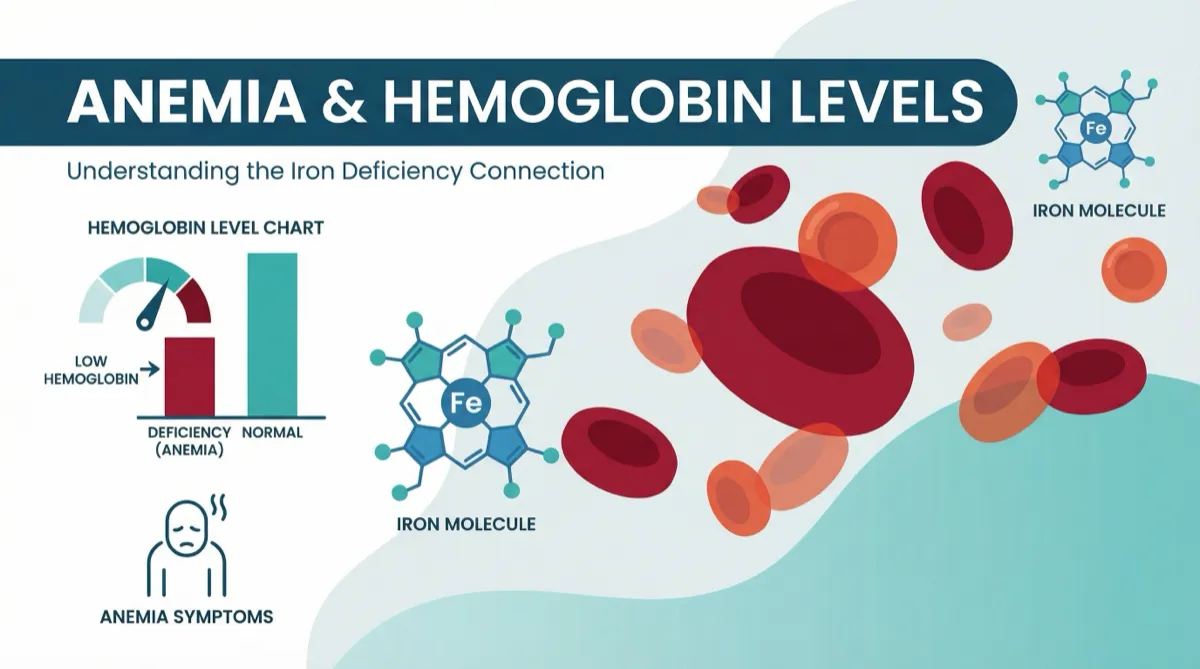
I see it in my clinic constantly. A woman comes in complaining of fatigue: the kind that doesn't improve with sleep. She has been told she's stressed, that she needs more exercise, that she should try meditation. She has been given an antidepressant. Nobody has checked her ferritin. When I finally run the lab, it comes back at 8 ng/mL. She is profoundly iron depleted and has been for years.
Iron deficiency is the most common nutritional deficiency in the world. Women of reproductive age carry most of that burden. The World Health Organization estimates that nearly 30% of reproductive-age women globally are anemic, most of them from iron deficiency. In the United States, the rates are lower but still high enough to matter. The condition is chronically underdiagnosed. Symptoms mimic a dozen other problems, and the lab thresholds many providers use sit too low.
This article covers who is affected, why women are hit harder, what research says about ferritin cutoffs, what happens in pregnancy, and what actually works for treatment.
Key takeaways
- Approximately 29.9% of women of reproductive age worldwide (about 571 million women) are anemic, predominantly from iron deficiency, per the WHO's 2021 global estimates.
- Women of reproductive age are roughly 5 times more likely than men to be iron deficient, primarily due to menstrual blood loss, per the NIH Office of Dietary Supplements.
- The standard ferritin threshold for iron deficiency (<12 ng/mL) misses a significant number of symptomatic women. Growing evidence supports a threshold of <30 ng/mL for identifying functional iron deficiency.
- Pregnant women need 27 mg of iron daily, nearly three times the non-pregnant requirement. Iron deficiency anemia in pregnancy is linked to preterm birth, low birth weight, and maternal mortality, per ACOG Practice Bulletin No. 233.
- A 2025 BMC Women's Health study found that women with iron deficiency, even without anemia, reported significantly worse fatigue, cognitive difficulties, and reduced quality of life compared to iron-sufficient controls.
29.9%
of women of reproductive age worldwide are anemic: about 571 million women, predominantly from iron deficiency.
World Health Organization, 2021 global anaemia estimates
571M
Women of reproductive age with anemia worldwide
WHO, 2021
5×
More likely than men to be iron deficient
NIH ODS, 2023
27 mg/day
Iron needed during pregnancy
ACOG, 2021
Iron deficiency in women at a glance
- Global anemia, women 15-49
- 29.9% (~571 million women) (WHO, 2021)
- Women vs. men, iron deficiency
- ~5× more likely (NIH ODS)
- U.S. women 12-49, iron deficiency
- ~10% (CDC)
- U.S. by race/ethnicity
- Black 16%; Mexican-American 13%; White 7% (CDC)
- Daily iron, pregnancy
- 27 mg (vs. 18 mg non-pregnant) (ACOG)
- Average U.S. dietary intake
- 12-14 mg/day for most women (NHANES)
The global prevalence picture
Iron deficiency anemia is a global problem, but its distribution is uneven. The WHO's 2021 global anaemia estimates put the prevalence of anemia among women aged 15 to 49 at 29.9% worldwide. That is roughly 571 million women. In South Asia and sub-Saharan Africa, prevalence exceeds 40%. In the United States and Western Europe, it ranges from 10% to 15% depending on the population studied.
Those numbers measure anemia: a hemoglobin level below 12 g/dL for non-pregnant women. Iron deficiency without anemia is far more common and far less consistently tracked. The WHO estimates that for every woman with iron deficiency anemia, at least one more is iron depleted but has not yet progressed to clinical anemia. The total number of women with some degree of iron depletion is likely north of 1 billion.
In the United States, CDC data shows that iron deficiency affects approximately 10% of women aged 12 to 49. Among non-Hispanic Black women, the rate is 16%. Among Mexican-American women, it is 13%. Among non-Hispanic white women, it is 7%. These disparities track closely with income, diet quality, and access to prenatal care.
| Group | Iron deficiency rate |
|---|---|
| All women aged 12-49 | ~10% |
| Non-Hispanic Black women | 16% |
| Mexican-American women | 13% |
| Non-Hispanic white women | 7% |
Source: CDC data on iron deficiency in U.S. women aged 12-49, as reported in this article.
Why women are disproportionately affected
The biology is straightforward. Women lose blood monthly during menstruation, and blood contains iron. The average menstrual period results in 30 to 40 mL of blood loss. A woman with heavy menstrual bleeding (defined clinically as more than 80 mL per cycle) can lose enough iron each month to outpace what diet alone can replace.
The NIH Office of Dietary Supplements notes that women of reproductive age need 18 mg of iron daily, compared to 8 mg for men. That gap exists entirely because of menstrual losses. Yet dietary intake data from NHANES consistently shows that most American women consume only 12 to 14 mg of iron per day. The math doesn't work. There is a built-in deficit.
Heavy menstrual bleeding is more common than many people realize. Population-based studies estimate that 10% to 30% of reproductive-age women experience objectively heavy periods. Conditions like endometriosis and uterine fibroids (both prevalent in women of childbearing age) directly increase menstrual blood loss and therefore iron depletion.
Add to that the iron demands of pregnancy and lactation (more on that below), the popularity of vegetarian and vegan diets among young women, and the widespread avoidance of red meat, and the picture becomes clear. The dietary supply side is shrinking while the physiological demand side remains constant.
If your periods are heavy or irregular, tracking them can help quantify what you are losing. Our period calculator and cycle length calculator can help you identify patterns worth bringing to your doctor.
The ferritin threshold debate
This is one of the most frustrating corners of women's health care. Ferritin is the primary blood test used to assess iron stores. A low ferritin level indicates depleted iron reserves. The question is: what counts as "low"?
Many laboratories set the lower reference limit for ferritin at 12 ng/mL. Some use 15. If a woman's ferritin is 13, her lab report comes back "normal." She is told her iron is fine. She continues to feel exhausted.
The problem is that a ferritin of 12 or 15 represents nearly empty iron stores. A 2015 review by Camaschella in the New England Journal of Medicine noted that a ferritin below 30 ng/mL has high sensitivity for identifying iron deficiency. The WHO uses a cutoff of 15 ng/mL for depleted iron stores, but acknowledges that this threshold misses iron deficiency in the setting of inflammation, where ferritin can be artificially elevated.
| Ferritin threshold | Used by | Clinical implication | Limitation |
|---|---|---|---|
| <12 ng/mL | Many U.S. labs | Definite iron depletion | Misses symptomatic women with levels 12-30 |
| <15 ng/mL | WHO | Depleted iron stores | Falsely normal when inflammation is present |
| <30 ng/mL | Hematologists, NEJM review | Functional iron deficiency | Most sensitive single test (Camaschella, 2015) |
| 50-100 ng/mL | Functional medicine | Optimal iron stores | Limited RCT evidence for this range |
An increasing number of hematologists and functional medicine practitioners argue that the clinical threshold should be 30 ng/mL. Some suggest that optimal iron stores sit at ferritin levels of 50 to 100 ng/mL. A 2013 review by Miller in Cold Spring Harbor Perspectives in Medicine described a ferritin below 30 as "the single most sensitive and specific test for iron deficiency."
The practical impact of this debate is large. A woman with a ferritin of 18 ng/mL who is told she is "normal" may spend months or years with preventable fatigue and hair loss because her lab value fell above an arbitrary cutoff that was not designed with her physiology in mind.
Maya Patel, RD
When I see a woman with fatigue and a ferritin below 30, I treat the iron deficiency. Not the number. The patient. A lab value that falls within a "normal" range does not mean it is normal for her.
Symptoms beyond fatigue
Fatigue is the symptom everyone associates with iron deficiency. It is real and often severe. But the symptom profile extends well beyond tiredness.
A 2025 cross-sectional study published in BMC Women's Health examined quality of life in women with iron deficiency (with and without anemia) compared to iron-sufficient controls. The findings were striking. Women with iron deficiency reported:
- Significantly worse physical fatigue and reduced exercise tolerance
- Higher rates of cognitive difficulties, including trouble concentrating and "brain fog"
- More frequent headaches
- Restless leg syndrome at rates roughly 3 times higher than iron-sufficient women
- Lower overall quality of life scores, even when hemoglobin was within normal range
That last point is important. You do not need to be anemic to suffer from iron deficiency. Many women experience debilitating symptoms at ferritin levels that are technically "normal" by outdated standards.
Other well-documented symptoms include brittle nails, cold intolerance, and pica (craving ice, clay, or starch). Pale skin and dizziness show up often. So does shortness of breath on exertion. Hair loss is particularly common and often the complaint that finally prompts a ferritin test, because it is visible in a way that fatigue is not.
What is less widely recognized is the impact on mood. Iron is required for the synthesis of dopamine and serotonin. Multiple studies have found associations between iron deficiency and increased rates of anxiety and depression, independent of anemia status. This is one reason why iron deficiency in women is sometimes misdiagnosed as a mood disorder.
Iron needs during pregnancy
Pregnancy increases iron requirements dramatically. ACOG Practice Bulletin No. 233 (2021) states that pregnant women need 27 mg of iron daily, up from 18 mg in non-pregnant women. The extra demand comes from expanding blood volume, growing a placenta, and supplying the fetus with iron for its own hemoglobin and tissue development.
Total iron needs over the course of a pregnancy are approximately 1,000 mg. The average woman's iron stores at conception hold 300 to 500 mg. Diet alone cannot make up the difference for most women, which is why prenatal vitamins contain iron and why ACOG recommends screening all pregnant women for anemia at the first prenatal visit.
Iron deficiency anemia in pregnancy is associated with a constellation of adverse outcomes. A meta-analysis published in the Journal of Nutrition found that maternal iron deficiency anemia was associated with a 63% increased risk of low birth weight and a 40% increased risk of preterm delivery. Severe anemia (hemoglobin <7 g/dL) during pregnancy is associated with increased maternal mortality, particularly in low-resource settings.
Despite these risks, iron deficiency anemia affects an estimated 18% to 20% of pregnant women in the United States. Among pregnant women in sub-Saharan Africa, the prevalence exceeds 50%. Globally, the WHO considers iron deficiency anemia in pregnancy a public health emergency.
If you are planning a pregnancy, getting your ferritin checked beforehand is one of the most useful things you can do. Starting pregnancy with depleted stores sets you up for a deficit that is difficult to recover from during the pregnancy itself. Our ovulation calculator can help with timing, but a preconception lab panel should include ferritin.
Populations at highest risk
Iron deficiency is not distributed equally. Several populations face disproportionate burden.
Adolescent girls. Menstruation begins during a period of rapid growth that already increases iron requirements. CDC data shows that iron deficiency prevalence among U.S. females aged 12 to 19 is approximately 9% to 16%, varying by race and ethnicity. Many adolescent girls consume diets low in bioavailable iron: fast food, processed snacks, limited red meat.
Women with heavy menstrual bleeding. As noted above, heavy periods are common and directly deplete iron stores. Women with conditions like uterine fibroids, adenomyosis, or endometriosis are at particularly high risk.
Vegetarian and vegan women. Non-heme iron (the type found in plant foods) is absorbed at a rate of 2% to 20%, compared to 15% to 35% for heme iron from animal sources. A 2018 review in the American Journal of Clinical Nutrition found that vegetarian and vegan women had significantly lower ferritin levels than omnivores, even when total dietary iron intake was comparable.
Women of color. As noted in the CDC data, non-Hispanic Black women have iron deficiency rates more than double those of non-Hispanic white women. This disparity reflects dietary factors, higher rates of uterine fibroids (which are 2 to 3 times more common in Black women), and systemic barriers to healthcare access.
Women with celiac disease or inflammatory bowel disease. Both conditions impair iron absorption in the small intestine. Iron deficiency is often the presenting symptom of undiagnosed celiac disease, particularly in women.
Frequent blood donors. Each whole blood donation removes approximately 200 to 250 mg of iron. The American Red Cross recommends a minimum 8-week interval between donations, but for many women, that interval is not sufficient for iron stores to replenish fully.
Treatment and absorption
Treating iron deficiency sounds simple. Take an iron supplement. In practice, it is often a frustrating process.
Oral iron supplements (typically ferrous sulfate, ferrous gluconate, or ferrous fumarate) are the first-line treatment. The standard dose is 150 to 200 mg of elemental iron daily. The problem is that oral iron causes gastrointestinal side effects in 30% to 50% of patients: nausea, constipation, abdominal cramps, and dark stools. Many women start a supplement and stop within a few weeks because they feel worse, not better.
Absorption is another challenge. Only about 10% to 15% of oral iron is absorbed, and that rate drops further when iron is taken with food, calcium, coffee, or tea. Taking iron on an empty stomach with vitamin C improves absorption but worsens nausea for many people.
A 2017 randomized trial published in The Lancet Haematology found that alternate-day dosing (taking iron every other day rather than daily) resulted in better fractional absorption and comparable improvements in iron stores, with fewer side effects. This approach has gained traction in clinical practice. High-dose daily iron triggers hepcidin production, which paradoxically blocks iron absorption for 24 hours after a dose.
For women who cannot tolerate or do not respond to oral iron, intravenous iron infusion is an effective alternative. Newer formulations like ferric carboxymaltose (Injectafer) can replenish iron stores in one or two infusions. IV iron bypasses the GI tract entirely and is increasingly used during pregnancy when oral supplementation fails. The cost, typically $500 to $2,000 per infusion, is a barrier for some patients, though insurance coverage has improved.
Dietary strategies matter as well, though they are usually insufficient on their own for someone who is already deficient. Red meat and organ meats are the richest dietary sources of heme iron. Oysters and dark-meat poultry rank high too. For a broader look at nutritional approaches for hormonal conditions, our PCOS diet guide covers some relevant overlap.
How long does it take to recover? With consistent treatment, most women see ferritin levels begin to rise within 4 to 6 weeks. Full replenishment of iron stores typically takes 3 to 6 months. Iron supplementation should continue for at least 3 months after ferritin normalizes to build a buffer against future depletion.
Frequently asked questions about iron deficiency in women
How common is iron deficiency in women?
Approximately 29.9% of women of reproductive age worldwide are anemic, mostly from iron deficiency, according to the WHO's 2021 global estimates. In the United States, iron deficiency affects about 10% of women aged 12 to 49, with higher rates among non-Hispanic Black women (16%) and Mexican-American women (13%), per CDC data.
What ferritin level indicates iron deficiency?
Many labs use a lower limit of 12 ng/mL, but growing evidence supports 30 ng/mL as a more clinically meaningful threshold. A 2015 New England Journal of Medicine review by Camaschella identified ferritin below 30 as highly sensitive for detecting iron deficiency. Women can experience significant symptoms (fatigue, brain fog, hair loss) at ferritin levels between 12 and 30.
Why do women need more iron than men?
Menstrual blood loss is the primary reason. The average period results in 30 to 40 mL of blood loss, removing iron from the body each month. Women of reproductive age need 18 mg of daily iron compared to 8 mg for men. During pregnancy, the requirement rises to 27 mg per day. Most women's diets provide only 12 to 14 mg daily.
Can iron deficiency cause hair loss?
Yes. Iron deficiency is one of the most common nutritional causes of hair loss in women. Low ferritin disrupts the hair growth cycle, particularly the anagen (growth) phase. Hair loss from iron deficiency is typically diffuse rather than patchy. Many dermatologists now screen ferritin as a first-line test for unexplained hair shedding in women.
How much iron do I need during pregnancy?
Pregnant women need 27 mg of iron daily, nearly three times the 8 mg recommended for men, according to ACOG Practice Bulletin No. 233. Total iron needs during pregnancy are approximately 1,000 mg. Most women cannot meet this through diet alone, which is why prenatal vitamins contain iron and why ACOG recommends anemia screening at the first prenatal visit.
Should I take iron every day or every other day?
A 2017 trial in The Lancet Haematology found that alternate-day iron dosing improved fractional absorption and reduced side effects compared to daily dosing. Taking iron every other day avoids triggering hepcidin, a hormone that blocks iron absorption for 24 hours after a large dose. For women with GI side effects from daily iron, alternate-day dosing is a well-supported alternative.
Tags:Iron DeficiencyAnemiaWomen's NutritionWomen's Health StatisticsPregnancy Nutrition
Sources & Citations
- World Health Organization. (2023). Anaemia in women and children: WHO global anaemia estimates, 2021 edition.[Source]
- Miller JL. (2013). Iron deficiency anemia: a common and curable disease. Cold Spring Harbor Perspectives in Medicine, 3(7), a011866.[Source]
- Camaschella C. (2015). Iron-deficiency anemia. New England Journal of Medicine, 372(19), 1832–1843.[Source]
- CDC. (2024). Iron and iron deficiency. Nutrition.[Source]
- BMC Women's Health. (2025). Symptom burden and quality of life in women with iron deficiency: a cross-sectional study.[Source]
- ACOG. (2021). Practice bulletin no. 233: Anemia in pregnancy.[Source]
- NIH Office of Dietary Supplements. (2023). Iron: fact sheet for health professionals.[Source]
Cite this page
Journalists, researchers and educators are welcome to quote these figures. Please credit Women's Health Association and link to this page so readers can reach the underlying sources.
Women's Health Association. (2026, March 1). Iron deficiency in women: what the statistics say about the most common nutritional gap. Retrieved from https://www.womenshealthassoc.com/insights/iron-deficiency-anemia-women-statistics
Published 2026, March 1

!
Medical Disclaimer
This content is for informational purposes only and is not a substitute for professional medical advice, diagnosis, or treatment. Always seek the advice of your physician or other qualified health provider with any questions you may have regarding a medical condition.
Keep Reading
View all articles
Women's Wellness 13 min read
Breast cancer screening statistics: what the survival data actually tells us
The 5-year survival rate for breast cancer caught early is 99%. Caught late, it drops to 31%. Here is what the latest screening, incidence, and disparity data tells us about where we stand and what still needs to change.
Women's Wellness 14 min read
Menopause and hormone therapy statistics: what the data says about HRT in 2026
About 1.3 million U.S. women enter menopause each year, but only 4-5% of eligible women use hormone therapy. Here is what the WHI study actually found, what has changed since, and why the treatment gap persists.
Women's Wellness 12 min read
Sleep disorders in women: why insomnia hits harder and what the data shows
Women are 40% more likely to have insomnia than men, and the risk spikes during pregnancy and menopause. Here is what the research says about hormones, sleep apnea underdiagnosis, and the real cost of lost sleep.
Evidence in your inbox.
Join 250,000+ women receiving our weekly breakdown of new research, policy changes, and health tools.