Loading...
Chronic Conditions14 min readUpdated
Endometriosis statistics: what the numbers say about diagnosis, treatment, and the funding gap
About 190 million women worldwide have endometriosis, but the average patient waits 4 to 11 years for a diagnosis. Here is what the latest research data tells us about who gets endometriosis, how it is treated, and why it remains chronically underfunded.

Written By
Dr. Sarah Jenkins
Board Certified OB/GYN

Medically Reviewed By
Dr. Emily Chen
Chief Medical Officer
Share
A woman I treated a few years ago told me she had been to seven doctors over nine years before anyone said the word "endometriosis." She was 34 by the time she got a diagnosis. Her story is not unusual. It is, statistically, average.
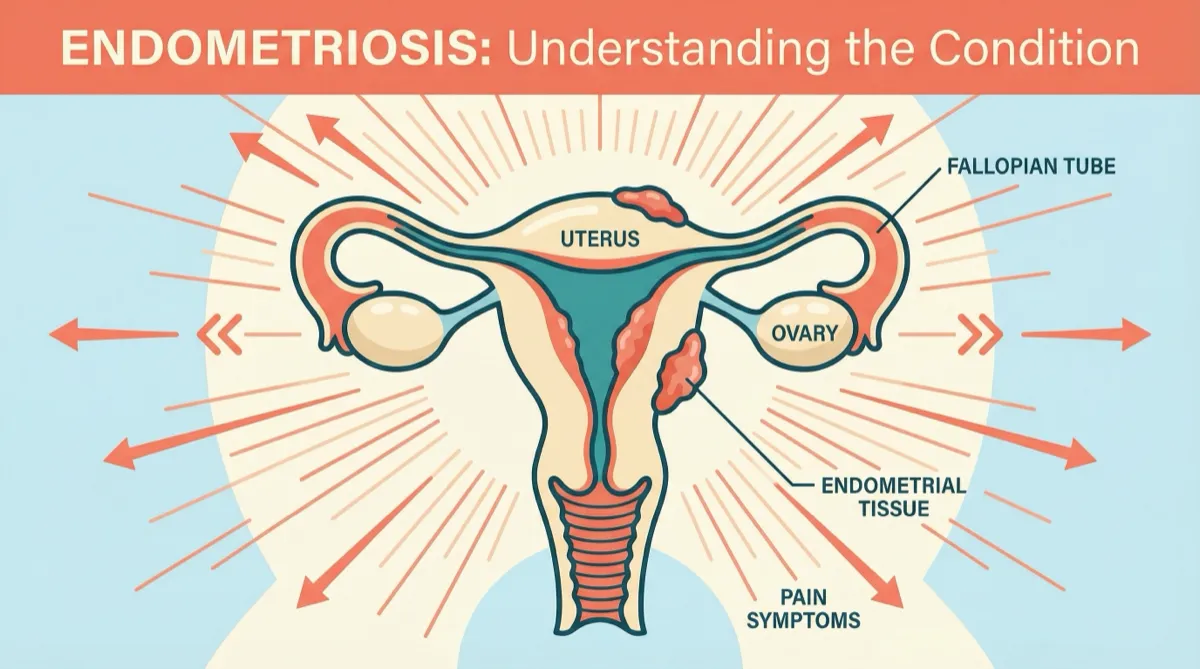
Endometriosis is a condition where tissue similar to the uterine lining grows outside the uterus. It causes chronic pain and inflammation; infertility follows in many cases. It is common, affecting roughly 1 in 10 women of reproductive age worldwide. And yet the gap between how many women have it and how quickly they find out remains one of the most frustrating problems in gynecology.
This article walks through the most recent data on prevalence and diagnosis timelines, then treatment patterns and costs, and why the disease remains poorly funded.
Key takeaways
- About 190 million women globally have endometriosis, according to the WHO. Prevalence estimates range from 10% to as high as 21% of reproductive-age women.
- The average diagnosis delay is 4 to 11 years depending on country. ACOG published its first-ever clinical guidance on diagnosis in February 2026 to help reduce this gap.
- Endometriosis diagnosis rates in the U.S. rose 32% between 2017 and 2024, per an Epic Research analysis of 25 million patient records.
- NIH funding for endometriosis was $28 million in FY 2024, compared to $3.1 billion for HIV/AIDS, despite endometriosis affecting more than 5 times as many Americans.
- Black women face longer diagnostic delays and are frequently told endometriosis is a "white women's disease," per MHQP research.
190 million
women and girls worldwide have endometriosis, roughly 1 in 10 of reproductive age.
World Health Organization, 2023
190M
Women affected worldwide
WHO, 2023
7-10 yrs
Average diagnosis delay
ACOG, 2026
$28M
NIH annual research funding
Statista, 2025
How many women have endometriosis
Endometriosis at a glance
- Prevalence
- 190 million women globally (WHO)
- Diagnosis delay
- 4-11 years average (ACOG)
- Fertility impact
- 30-50% experience infertility
- Annual U.S. cost
- $80 billion (medical + productivity)
- NIH funding (FY2024)
- $28 million
- First-line treatment
- Hormonal therapy (60-80% response rate)
The World Health Organization estimates that 190 million women and girls worldwide have endometriosis. In the United States, that translates to approximately 6.5 million women of reproductive age.
The actual number is almost certainly higher. Many women go undiagnosed for years, and some never receive a diagnosis at all. Clinical studies place the true prevalence somewhere between 10% and 21%, depending on the population studied and the diagnostic criteria used.
What has changed recently is the rate at which women are getting diagnosed. An Epic Research analysis of more than 25 million women who had at least one outpatient visit between 2017 and 2024 found that the annual rate of new endometriosis diagnoses climbed 32%, from 24.9 per 10,000 patients to 32.8 per 10,000. The increase was consistent across all age groups, though women aged 35 to 49 had the highest diagnosis rate at 85.4 per 10,000.
That upward trend probably reflects growing awareness, not a real increase in disease incidence. More women are asking their doctors about it. More doctors are thinking to look for it. Social media has played a measurable role here: searches for "endometriosis symptoms" on Google have tripled since 2019.
Why diagnosis takes so long
The average time from first symptoms to an endometriosis diagnosis varies by country, but the numbers are consistently grim.
| Country / Region | Average diagnosis delay | Sample | Source |
|---|---|---|---|
| Austria & Germany | 10.4 years | Survey data | Multiple studies |
| New Zealand (overall) | 8.6 years | 1,024 patients | Ellis, 2024 |
| New Zealand (Pasifika women) | 12.4 years | Subset | Ellis, 2024 |
| New Zealand (Māori women) | 11.6 years | Subset | Ellis, 2024 |
| Ibero-American countries | 6.6 years | Multi-country | Nnoaham et al. |
| Canada | 5.4 years | Survey data | Nnoaham et al. |
| United States | 4-11 years | Clinical range | ACOG, 2026 |
Source: Ellis, 2024 (New Zealand); ACOG, 2026 (United States); Nnoaham et al. (Ibero-American countries, Canada); multiple studies (Austria & Germany).
A 2024 survey of 1,024 endometriosis patients in New Zealand found average delays of 8.6 years. In Austria and Germany, the figure is 10.4 years. Canada comes in at 5.4 years. Across Ibero-American countries, the average is 6.6 years.
In February 2026, ACOG published its first-ever clinical guidance specifically on diagnosing endometriosis. The document noted that patients wait 4 to 11 years on average after experiencing symptoms. ACOG's core recommendation was a shift: a physical examination or symptom assessment should be enough for a presumptive diagnosis. Patients should not have to wait for surgical confirmation.
That matters because historically, the "gold standard" for diagnosing endometriosis was laparoscopic surgery. The procedure requires anesthesia and a recovery period. Many patients simply could not access it or were told their pain did not warrant investigation. The ACOG guidance explicitly acknowledges this problem: "The traditional reliance on surgical findings to diagnose endometriosis is an important contributor to diagnostic delays."
Several factors stack the deck against early diagnosis:
- Symptoms overlap with irritable bowel syndrome, pelvic inflammatory disease, and painful periods that are dismissed as "normal"
- Many women see 5 or more physicians before someone considers endometriosis
- Primary care training on endometriosis remains limited. Multiple studies have identified a need for better physician education at the GP level.
- Women themselves often do not know endometriosis exists. The New Zealand survey found that low awareness of the condition at symptom onset was a consistent driver of delays.
What symptoms look like before diagnosis
The Epic Research dataset gives us a detailed picture of what shows up in medical records before a diagnosis is made. Among patients diagnosed in 2024:
- 55.9% had documented abdominal or pelvic pain within the two years prior to diagnosis
- 30.2% had heavy menstrual bleeding
- 23.1% reported pain during intercourse
- 18.7% had infertility-related concerns
| Symptom | Share of patients |
|---|---|
| Abdominal or pelvic pain | 55.9% |
| Heavy menstrual bleeding | 30.2% |
| Pain during intercourse | 23.1% |
| Infertility-related concerns | 18.7% |
Source: Epic Research analysis of outpatient records for patients diagnosed in 2024.
Dr. Sarah Jenkins, OB/GYN
I have treated patients who saw seven or eight physicians before someone said the word "endometriosis." The average diagnosis delay is not a failure of individual doctors. It is a failure of medical education. We do not teach primary care providers to recognize this condition early, and we should.
What strikes me about those numbers is that 55.9% figure. More than half of these women had pelvic pain on their medical charts for two years before someone put the pieces together. For the other 44%, the pain was either not documented, not reported, or attributed to something else entirely.
The pain itself is not subtle. Endometriosis pain tends to be cyclical, worsening around menstruation, but it can also be constant. It frequently involves the bowel and bladder, which is why so many women receive an IBS diagnosis first. Some women describe it as a deep, aching pressure. Others say it feels like internal burning. The point is that there is no single presentation, which is part of what makes this difficult.
If you experience chronic pelvic pain, painful periods that interfere with daily life, pain during sex, or bowel-related symptoms that seem tied to your menstrual cycle, our period calculator can help you track patterns. Bring that data to your doctor. Patterns matter for diagnosis.
Endometriosis and fertility
Between 30% and 50% of women with endometriosis experience difficulty getting pregnant. The condition is found in 25% to 50% of women who seek treatment for infertility. Those are rough numbers, because the relationship between endometriosis and fertility is complicated and not fully understood.
In mild to moderate endometriosis, inflammation may interfere with ovulation, fertilization, or implantation. In more severe cases, adhesions and scar tissue can physically distort the anatomy of the fallopian tubes and ovaries. Surgical excision of endometrial lesions can approximately double natural conception rates in mild-to-moderate disease, though the benefit is less clear in severe cases.
For women who pursue IVF, the data is mixed. Fertilization rates look lower in some series and comparable to women without endometriosis in others, particularly after adequate surgical or hormonal treatment. This is one area where the research genuinely does not give a clean answer, and any clinician who tells you otherwise is oversimplifying.
If you are trying to conceive and have endometriosis, our ovulation calculator and IVF date calculator may be useful for tracking your cycle and planning with your reproductive endocrinologist.
How endometriosis is treated
There is no cure for endometriosis. Treatment aims to manage symptoms and preserve fertility when that is a goal. Quality of life is the other measure that matters. The approach depends on disease severity and whether the patient wants to become pregnant.
Hormonal therapy is the most common first-line treatment. Combined oral contraceptives and progestins suppress the menstrual cycle and can shrink endometrial implants. Gonadotropin-releasing hormone (GnRH) agonists do the same by a different route. Roughly 60% to 80% of patients get meaningful symptom relief from hormonal approaches.
Surgery remains an option for patients who do not respond to medication or who have anatomical distortion. Laparoscopic excision (cutting out endometrial tissue) produces significant pain reduction in about 70% of patients. The problem is recurrence: 20% to 40% of women see symptoms return within five years of surgery.
Elagolix (Orilissa), approved by the FDA in 2018, was the first medication designed specifically for endometriosis-associated pain. It is a GnRH antagonist that suppresses estrogen production. In clinical trials, 75% of patients with dysmenorrhea and 50% with non-menstrual pelvic pain saw improvement at three months. Side effects include bone density loss with long-term use, which limits how long patients can take it.
Hysterectomy is performed in roughly 12% of endometriosis cases. It removes the uterus but does not guarantee symptom resolution, because endometrial implants outside the uterus can continue to cause pain. It is not a cure, despite a persistent misconception.
The cost of endometriosis
The financial burden is significant and falls unevenly. Studies estimate that annual healthcare costs per endometriosis patient in the United States average $12,000 to $16,000, depending on disease severity and whether surgical intervention is involved. Patients with endometriosis also report losing an average of 10.8 hours of work per week due to pain and related symptoms.
Emergency department visits linked to endometriosis-related pain have risen sharply, though precise national figures are difficult to pin down because many of these visits are coded as "pelvic pain" or "abdominal pain" rather than endometriosis specifically.
The total annual economic burden in the U.S., including direct medical costs and lost productivity, is estimated at roughly $80 billion. For context, that is comparable to the economic burden of migraine, another condition that disproportionately affects women.
Racial disparities in care
Endometriosis has historically been characterized as a condition primarily affecting white women. That framing is inaccurate, and it has caused real harm.
A 2025 research roadmap published by MHQP (Massachusetts Health Quality Partners) documented how Black women with endometriosis face compounding barriers: delayed diagnosis, inadequate pain management, and restricted access to specialized treatment. The report included testimony from patients who were explicitly told by their doctors that endometriosis was a "white women's disease."
The data supports what those patients described. Black women are diagnosed with endometriosis at lower rates than white women, even though available evidence suggests similar or potentially higher prevalence. Diagnostic delays for Māori women in New Zealand averaged 11.6 years and 12.4 years for Pasifika women, compared to 8.6 years overall, according to the 2024 New Zealand survey.
In the United States, women living in lower-income communities are less likely to receive specialist referrals or surgical evaluation. Women on Medicaid face longer wait times for gynecological consultations, and the disparity grows wider outside of major metropolitan areas.
Those delays are years of preventable suffering. If you want to understand more about how hormonal conditions like PCOS intersect with diagnosis challenges, that overlap is relevant here too. Many women with endometriosis are initially misdiagnosed with PCOS or vice versa.
Research funding
Here is where the numbers get difficult to look at.
In fiscal year 2024, the National Institutes of Health allocated $28 million for endometriosis research. That represents meaningful growth from 2017, when the figure was just $6 million. But the scale of funding is still disproportionate to the disease burden.
For comparison: NIH funding for HIV/AIDS in 2022 was $3.1 billion. HIV/AIDS affects approximately 1.2 million Americans. Endometriosis affects 6.5 million. Per-patient research spending on endometriosis comes out to roughly $4.30 per affected person per year. For HIV/AIDS, it is approximately $2,583.
Nobody is arguing that HIV/AIDS funding should be reduced. But the disparity is hard to justify on medical grounds alone. Between 2015 and 2024, cumulative NIH funding for endometriosis totaled $132 million. Over the same period, diabetes research received $15.4 billion.
Some of this gap reflects the historical marginalization of women's health research. Until 1993, most NIH-funded studies were not required to include female participants. The NIH Revitalization Act changed that, but the funding pipeline for conditions that exclusively affect women has been slow to catch up.
Frequently asked questions about endometriosis statistics
How common is endometriosis?
Endometriosis affects approximately 190 million women and girls worldwide, according to the World Health Organization. That translates to roughly 1 in 10 women of reproductive age. In the United States, an estimated 6.5 million women have the condition. True prevalence may be higher because many cases remain undiagnosed.
How long does it take to get diagnosed with endometriosis?
The average diagnosis delay ranges from 4 to 11 years depending on the country. In the United States, ACOG cites 4 to 11 years from symptom onset to diagnosis. A 2024 New Zealand survey found an average delay of 8.6 years. ACOG published its first clinical guidance on endometriosis diagnosis in February 2026, recommending that providers use symptom assessment for presumptive diagnosis rather than requiring surgery.
Does endometriosis cause infertility?
Between 30% and 50% of women with endometriosis experience difficulty conceiving. Endometriosis is present in 25% to 50% of women who seek infertility treatment. However, many women with endometriosis do become pregnant, either naturally or through assisted reproduction. Surgical treatment can improve conception rates in mild to moderate cases.
How much does endometriosis cost to treat?
Annual healthcare costs for endometriosis patients in the United States average $12,000 to $16,000. The total annual economic burden, including lost work productivity, is estimated at $80 billion. Patients report missing an average of 10.8 hours of work per week due to symptoms.
Why is endometriosis underfunded?
NIH allocated $28 million for endometriosis research in FY 2024, compared to $3.1 billion for HIV/AIDS. The disparity partly reflects decades of underinvestment in conditions that exclusively affect women. Per-patient funding for endometriosis is about $4.30 annually, versus $2,583 for HIV/AIDS. Advocacy groups including the Endometriosis Foundation of America are working to close this gap.
Are Black women less likely to be diagnosed with endometriosis?
Yes. Research shows that Black women are diagnosed with endometriosis at lower rates than white women despite similar or potentially higher prevalence. A 2025 MHQP research roadmap documented that Black women face longer diagnostic delays, inadequate pain management, and restricted access to specialized care. Some patients reported being told by clinicians that endometriosis was a "white women's disease."
Tags:EndometriosisChronic PainFertilityDiagnosisWomen's Health StatisticsResearch Funding
Sources & Citations
- World Health Organization. (2023). Endometriosis fact sheet.[Source]
- Epic Research. (2024). Endometriosis rates increasing across all ages, most common in women 35–49.[Source]
- American College of Obstetricians and Gynecologists. (2026). Clinical guidance on diagnosing endometriosis.[Source]
- Statista. (2025). NIH research funding for endometriosis, FY 2008–2024.[Source]
- BMC Women's Health. (2025). Global burden and trends of endometriosis, 1990–2021.[Source]
- MHQP. (2025). Patient-centered research roadmap to advance equity in endometriosis care for Black women.[Source]
- Ellis K. (2024). Diagnostic delays for endometriosis in New Zealand. OBGYN, Wiley.[Source]
Cite this page
Journalists, researchers and educators are welcome to quote these figures. Please credit Women's Health Association and link to this page so readers can reach the underlying sources.
Women's Health Association. (2026, March 1). Endometriosis statistics: what the numbers say about diagnosis, treatment, and the funding gap. Retrieved from https://www.womenshealthassoc.com/insights/endometriosis-statistics-diagnosis-treatment
Published 2026, March 1

!
Medical Disclaimer
This content is for informational purposes only and is not a substitute for professional medical advice, diagnosis, or treatment. Always seek the advice of your physician or other qualified health provider with any questions you may have regarding a medical condition.
Keep Reading
View all articles
Chronic Conditions 12 min read
Alzheimer's dementia statistics in women: why two-thirds of patients are female
Almost two-thirds of Americans with Alzheimer's are women. Lifetime risk at 45 is about 1 in 5 for women versus 1 in 10 for men. Here is what the data says about prevalence, caregiving, APOE4, diagnosis delays, and cost of care.

Chronic Conditions 13 min read
Fibromyalgia statistics: four million U.S. adults and the multi-year wait for a diagnosis
Fibromyalgia affects about 4 million U.S. adults (roughly 2%). Women are about twice as likely to have it as men, diagnosis often takes years, and population surveys show most people who meet symptom criteria never receive the clinical label.

Chronic Conditions 15 min read
Long COVID statistics in women: the sex disparity in post-COVID illness
Women are nearly twice as likely as men to report current long COVID (4.4% vs 2.3% of U.S. adults in 2022). Here is what the latest surveillance data shows on prevalence, symptoms, ME/CFS and POTS overlap, employment impact, and diagnostic delays.
Evidence in your inbox.
Join 250,000+ women receiving our weekly breakdown of new research, policy changes, and health tools.