Loading...
Women's Wellness13 min readUpdated
Breast cancer screening statistics: what the survival data actually tells us
The 5-year survival rate for breast cancer caught early is 99%. Caught late, it drops to 31%. Here is what the latest screening, incidence, and disparity data tells us about where we stand and what still needs to change.

Written By
Dr. Emily Chen
Chief Medical Officer

Medically Reviewed By
Dr. Sarah Jenkins
Board Certified OB/GYN
Share
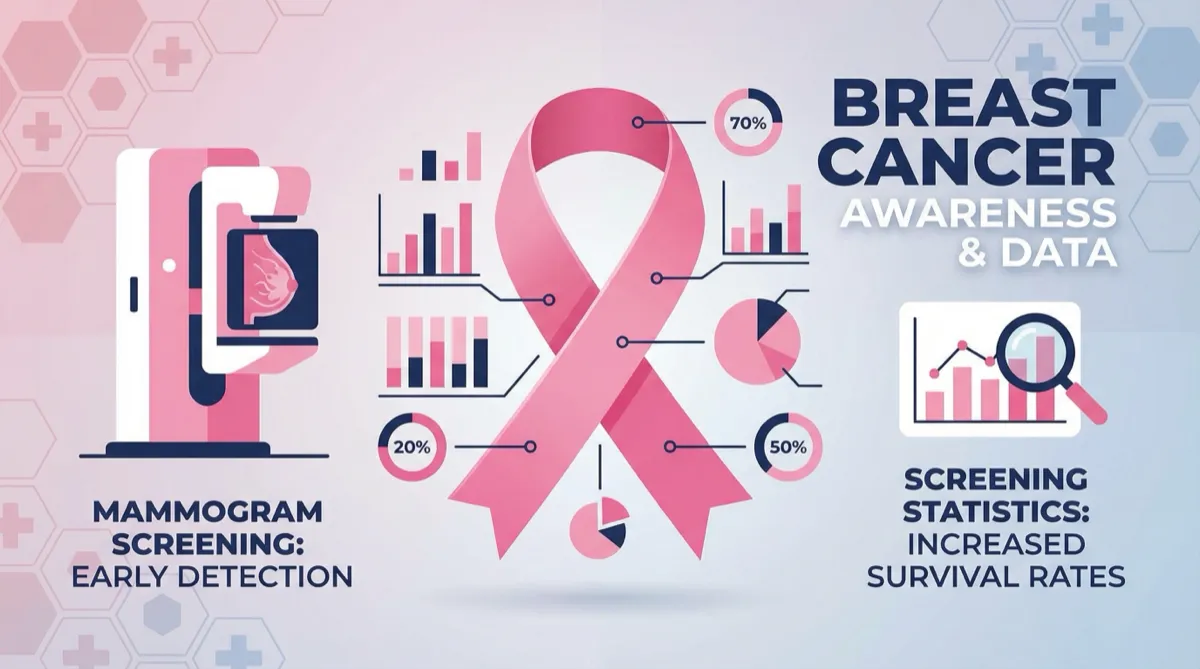
There is a statistic that I come back to whenever a patient tells me she has been putting off her mammogram. The 5-year survival rate for breast cancer detected at the localized stage is 99%. For breast cancer that has spread to distant organs, it is 31%. That is not a modest difference. That is the distance between a treatable condition and a life-threatening one, and the primary variable separating those two outcomes is timing.
Breast cancer remains the most commonly diagnosed cancer in women worldwide and the second leading cause of cancer death among American women. But the story the data tell is not one-dimensional. Incidence is rising. Survival is improving. Guidelines have shifted. And the gap between who gets screened and who does not still tracks closely with race and income.
Key takeaways
- An estimated 310,720 new cases of invasive breast cancer will be diagnosed in U.S. women in 2025, per the American Cancer Society.
- The USPSTF updated its screening recommendation in April 2024, now advising biennial mammograms starting at age 40 for all women, down from the previous recommendation of age 50.
- Five-year relative survival is 99% for localized breast cancer, 86% for regional, and 31% for distant. About 63% of cases are caught at the localized stage.
- Black women have a 41% higher breast cancer mortality rate than white women, despite similar incidence rates. The gap has not narrowed significantly in a decade.
- Only 46% of uninsured women aged 40 and older have had a recent mammogram, compared to 79% of insured women.
99%
5-year relative survival for breast cancer detected at the localized stage is 99%. It is 31% when found after it has spread to distant organs.
SEER Cancer Statistics Review, 2025
310,720
New invasive cases estimated in 2025
ACS, 2025
99%
5-year survival for localized stage
SEER, 2025
41%
Higher mortality rate for Black women
CDC, 2025
Breast cancer screening at a glance
- New invasive cases, 2025
- 310,720 U.S. women (ACS)
- Lifetime risk
- About 1 in 8 U.S. women (~13%)
- 5-year survival, localized
- 99% (SEER)
- 5-year survival, distant
- 31% (SEER)
- Black-white mortality gap
- 41% higher death rate for Black women (CDC)
- Recent mammogram, uninsured 40+
- 46% vs. 79% among insured women
The incidence picture
The American Cancer Society estimates that 310,720 women in the United States will be diagnosed with invasive breast cancer in 2025, along with 56,500 cases of ductal carcinoma in situ (DCIS), a non-invasive form. That adds up to about 367,000 new breast cancer diagnoses this year.
Globally, 2.3 million women receive a breast cancer diagnosis each year, making it the most common cancer worldwide since 2020, when it overtook lung cancer. Roughly 1 in 8 U.S. women (about 13%) will develop invasive breast cancer at some point in their lives.
Incidence has been rising slowly, about 0.5% per year over the last decade. Part of that reflects better detection. Part of it reflects real changes in risk factors: rising obesity rates, declining birth rates, later age at first pregnancy, and increased alcohol consumption. With population-level data it is genuinely hard to tell "we're finding more" apart from "there is more to find."
An estimated 42,250 women will die from breast cancer in the U.S. in 2025. That number has been falling. CDC data show it dropped about 1.6% per year on average between 1999 and 2020. The decline is real. It comes down to two things: earlier detection through screening and better treatment.
Screening rates and who is missing
Among U.S. women aged 50 to 74, about 76% report having had a mammogram within the past two years. That is a reasonable number, though it means roughly 1 in 4 women in the highest-risk age group are not being screened on schedule.
Screening falls off steeply by age and economic status. For women aged 40 to 49, the rate is around 58%. For uninsured women over 40, only 46% have had a recent mammogram, compared to 79% among insured women. That 33-percentage-point gap is one of the most consequential disparities in preventive medicine.
The 2024 KFF Women's Health Survey asked women why they had skipped screening. The answers were practical, not cavalier: 22% cited cost, 18% couldn't get time off work, and 14% said they didn't have a regular doctor. These are system failures, not patient failures.
The COVID-19 pandemic also set screening back significantly. In April 2020, mammography volume dropped by 87% nationally. It took until mid-2022 for volumes to return to pre-pandemic levels. The downstream effect of that 2-year disruption (more cancers diagnosed at later stages) is still being measured.
If you haven't tracked your cycle recently or are approaching the age where regular screening becomes important, our period tracking calculator can help you establish baseline awareness of your body's patterns.
What early detection does to survival
The survival data for breast cancer is where screening makes its case most forcefully.
| Stage at diagnosis | 5-year relative survival | Percent of cases diagnosed |
|---|---|---|
| Localized (confined to the breast) | 99.3% | 63% |
| Regional (spread to nearby lymph nodes) | 86.4% | 28% |
| Distant (metastatic) | 31.3% | 6% |
Source: SEER Cancer Statistics Review, 2015-2021.
The overall 5-year relative survival rate is 90.8%. In the 1970s it was closer to 75%, so this is enormous progress. Yet the average hides a steep gradient. When cancer is caught before it leaves the breast, the outlook is excellent. When it has already metastasized by the time it is found, the picture is very different.
Studies consistently show that women who undergo regular screening have a 20% to 30% lower risk of dying from breast cancer compared to those who do not. That is not a subtle effect. In absolute terms, mammography screening is estimated to prevent 12,000 to 15,000 breast cancer deaths annually in the United States.
The new screening guidelines
In April 2024, the U.S. Preventive Services Task Force released an updated recommendation that represented a meaningful shift. The USPSTF now recommends biennial screening mammography for all women starting at age 40. Previously, the recommendation was to start at age 50 for average-risk women, with an individual decision-making approach for women in their 40s.
Two things drove the change. Modeling data showed that starting screening at 40 would catch more cancers at earlier stages across all racial and ethnic groups. There was also growing evidence that Black women in particular benefit from earlier screening, because aggressive subtypes appear more often at younger ages in this group.
Age 30
High-risk women (BRCA1/BRCA2 carriers, chest radiation history) begin screening with both MRI and mammography (ACS/NCCN)
Age 40
Biennial screening mammography for all average-risk women (USPSTF, 2024 update). Insurance must cover with no copay.
Age 45
Annual mammograms recommended by the American Cancer Society, with the option to begin at 40
Age 55
ACS recommends transitioning to biennial screening, or continuing annually based on patient preference
Age 74
USPSTF recommendation ends at 74; screening beyond this age is an individual decision based on health status
Other guideline highlights:
- The American Cancer Society recommends annual mammograms starting at age 45, with the option to begin at 40
- High-risk women (BRCA1/BRCA2 carriers, history of chest radiation) should begin screening with both MRI and mammography at age 30
- 3D mammography (digital breast tomosynthesis) reduces false-positive recall rates by 15% to 40% and detects 20% to 65% more invasive cancers than standard 2D imaging
The USPSTF recommendation carries weight because the Affordable Care Act requires insurers to cover services with a grade B recommendation or higher without cost-sharing. The updated grade B recommendation means mammograms starting at 40 must be covered by insurance with no copay.
The racial mortality gap
This is where the data gets uncomfortable.
Black women in the United States have a 41% higher breast cancer death rate compared to non-Hispanic white women, according to a CDC analysis covering 1999 to 2020. The breast cancer incidence rate for Black women is roughly similar to that of white women, which means the mortality gap is driven almost entirely by differences in stage at diagnosis, tumor biology, and access to timely, high-quality treatment.
A 2025 report from the American Cancer Society (Saka et al., published in CA: A Cancer Journal for Clinicians) detailed the disparity further. Black women are more likely to be diagnosed with triple-negative breast cancer, an aggressive subtype that does not respond to hormone therapy and has fewer targeted treatment options. They are also more likely to be diagnosed at a later stage and less likely to complete the full course of recommended treatment.
The five-year survival rate for Black women with breast cancer is approximately 82%, compared to 92% for white women. That 10-percentage-point gap represents thousands of preventable deaths each year.
Hispanic women are about 30% more likely to be diagnosed at a later stage than white women. American Indian and Alaska Native women have the lowest mammography screening rates of any racial or ethnic group.
These disparities are driven by insurance coverage gaps, fewer mammography facilities in underserved communities, implicit bias in clinical settings, and differences in follow-up care after an abnormal result. They are systemic, not biological.
Age, risk, and genetics
Age is the single strongest risk factor for breast cancer. The median age at diagnosis is 62. Breast cancer risk increases with every decade of life: about 1 in 227 women in their 30s, 1 in 68 in their 40s, 1 in 42 in their 50s, and 1 in 26 in their 60s.
About 4% of invasive breast cancers are diagnosed in women under 40. It is rare in younger women, but not impossible, and younger women tend to have more aggressive tumor types.
Genetic factors play a role in a subset of cases. Women with BRCA1 mutations have a 55% to 72% lifetime risk of breast cancer. BRCA2 carriers have a 45% to 69% risk. But here is the number that gets lost in the genetics conversation: about 85% of breast cancers occur in women with no family history of the disease. Genetics explain a minority of cases. Most breast cancer is not inherited.
Other established risk factors include early menstruation (before age 12), late menopause (after 55), never having given birth or having a first child after 30, obesity after menopause, hormone replacement therapy use, and alcohol consumption. If you're curious about your cycle patterns, our cycle length calculator can help you track changes over time.
The economics of screening versus treatment
Screening is cheap relative to treatment. A standard mammogram costs $100 to $250 without insurance. Treating early-stage breast cancer costs $60,000 to $80,000 on average. Treating metastatic breast cancer routinely exceeds $250,000 and can run well past $500,000 over a patient's lifetime.
Annual breast cancer treatment costs in the United States exceed $30 billion. Health economists estimate every $1 invested in mammography screening saves $4 to $6 downstream.
Women diagnosed at stage IV lose an average of 18 years of life expectancy. That frames the trade clearly. The financial case for screening is strong. The human case is stronger.
What to do with this information
If you take one thing from this article, let it be this: the survival gap between early and late detection is enormous, and screening is the primary tool for shifting that balance.
- If you are 40 or older, schedule a mammogram. Under the updated USPSTF recommendation, your insurance is required to cover it at no cost to you.
- If you have dense breasts (your mammogram report will tell you), ask your doctor about supplemental screening with ultrasound or MRI. Dense tissue makes cancer harder to detect on standard imaging.
Dense breast tissue and screening
About 40% of women have dense breasts, which both increases breast cancer risk and makes tumors harder to see on standard mammograms. As of 2024, the FDA requires all mammography facilities to notify patients about their breast density. If you are told you have dense breasts (categories C or D), ask about supplemental screening with breast ultrasound or MRI.
- If you have a strong family history of breast or ovarian cancer, ask about genetic counseling. BRCA testing can determine if earlier or more intensive screening is appropriate.
- If you are uninsured, the CDC's National Breast and Cervical Cancer Early Detection Program provides free or low-cost mammograms in every state. Call 1-800-232-4636 for local access.
For broader health tracking, our health resources page and perimenopause guide cover related topics that intersect with breast cancer risk, particularly around menopause and hormone therapy decisions.
Frequently asked questions about breast cancer screening
At what age should women start getting mammograms?
The U.S. Preventive Services Task Force updated its recommendation in April 2024 to advise biennial mammography starting at age 40 for all women at average risk. The American Cancer Society recommends starting annual mammograms at age 45, with the option to begin at 40. Women at high risk due to BRCA mutations or chest radiation history should begin screening at age 30 with both MRI and mammography.
What is the 5-year survival rate for breast cancer?
The overall 5-year relative survival rate for breast cancer in the United States is 90.8%. When cancer is caught at the localized stage (before it spreads beyond the breast), survival is 99.3%. For regional spread, it is 86.4%. For distant metastatic disease, survival drops to 31.3%. These figures come from SEER data covering 2015 to 2021.
Why do Black women have higher breast cancer mortality rates?
Black women have a 41% higher breast cancer death rate than white women despite similar incidence rates, according to CDC data. The disparity is driven by higher rates of aggressive tumor subtypes (particularly triple-negative breast cancer), later stage at diagnosis, differences in access to timely treatment, and systemic inequities in healthcare. The five-year survival rate for Black women is 82% versus 92% for white women.
Does insurance cover mammograms?
Yes. Under the Affordable Care Act, insurance plans must cover mammograms with a USPSTF grade B recommendation or higher at no cost to the patient. The 2024 USPSTF update means biennial screening starting at age 40 is now covered without copay. For uninsured women, the CDC's National Breast and Cervical Cancer Early Detection Program provides free or low-cost screening in all 50 states.
How often should I get a mammogram?
The USPSTF recommends every two years (biennial) for women aged 40 to 74 at average risk. The American Cancer Society recommends annual screening for women aged 45 to 54, then biennial screening for women 55 and older. Women at high risk may need annual screening. Discuss your individual risk with your doctor to determine the right schedule.
Tags:Breast CancerMammogramScreeningCancer PreventionWomen's Health StatisticsHealth Disparities
Sources & Citations
- American Cancer Society. (2025). Breast Cancer Facts & Figures 2025.[Source]
- SEER Cancer Statistics Review. (2025). Breast Cancer Stat Facts.[Source]
- USPSTF. (2024). Final Recommendation Statement: Breast Cancer Screening.[Source]
- CDC. (2025). Disparities in Breast Cancer Deaths.[Source]
- Saka AH, et al. (2025). Cancer statistics for African American and Black people, 2025. CA: A Cancer Journal for Clinicians.[Source]
- KFF Women's Health Survey. (2024). Women's Experiences with Preventive Services.[Source]
Cite this page
Journalists, researchers and educators are welcome to quote these figures. Please credit Women's Health Association and link to this page so readers can reach the underlying sources.
Women's Health Association. (2026, March 1). Breast cancer screening statistics: what the survival data actually tells us. Retrieved from https://www.womenshealthassoc.com/insights/breast-cancer-screening-statistics-women
Published 2026, March 1

!
Medical Disclaimer
This content is for informational purposes only and is not a substitute for professional medical advice, diagnosis, or treatment. Always seek the advice of your physician or other qualified health provider with any questions you may have regarding a medical condition.
Keep Reading
View all articles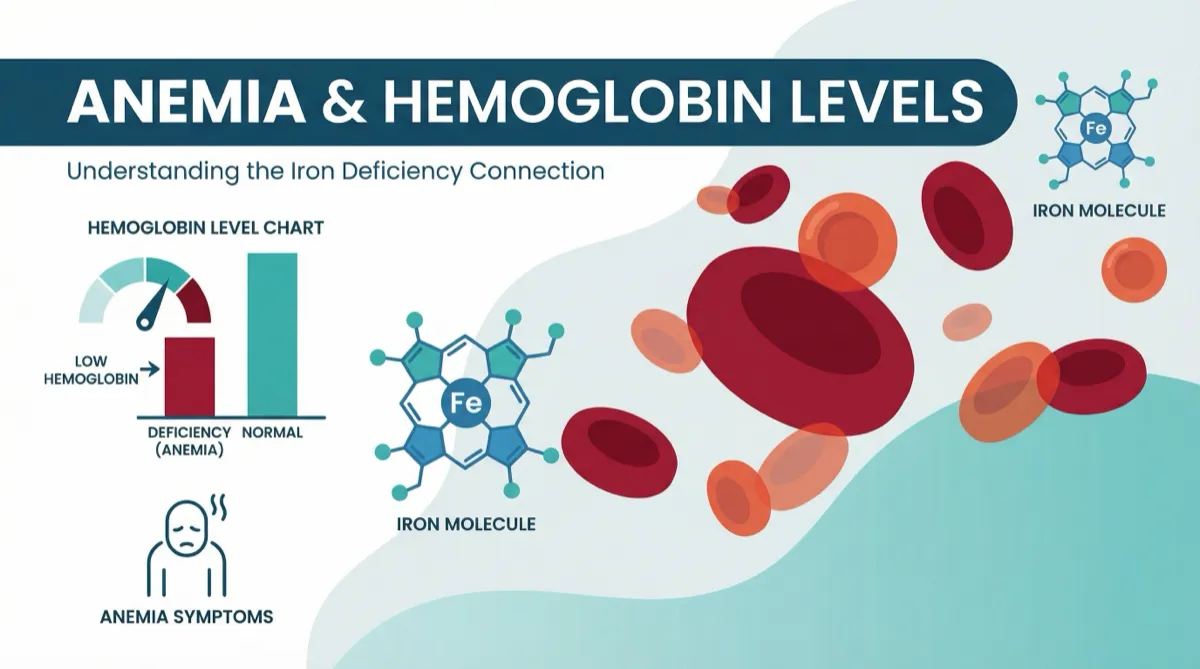
Women's Wellness 12 min read
Iron deficiency in women: what the statistics say about the most common nutritional gap
Nearly 30% of reproductive-age women worldwide are anemic, and women are 5x more likely than men to be iron deficient. Here is what the data says about symptoms, thresholds, and why so many cases are missed.
Women's Wellness 14 min read
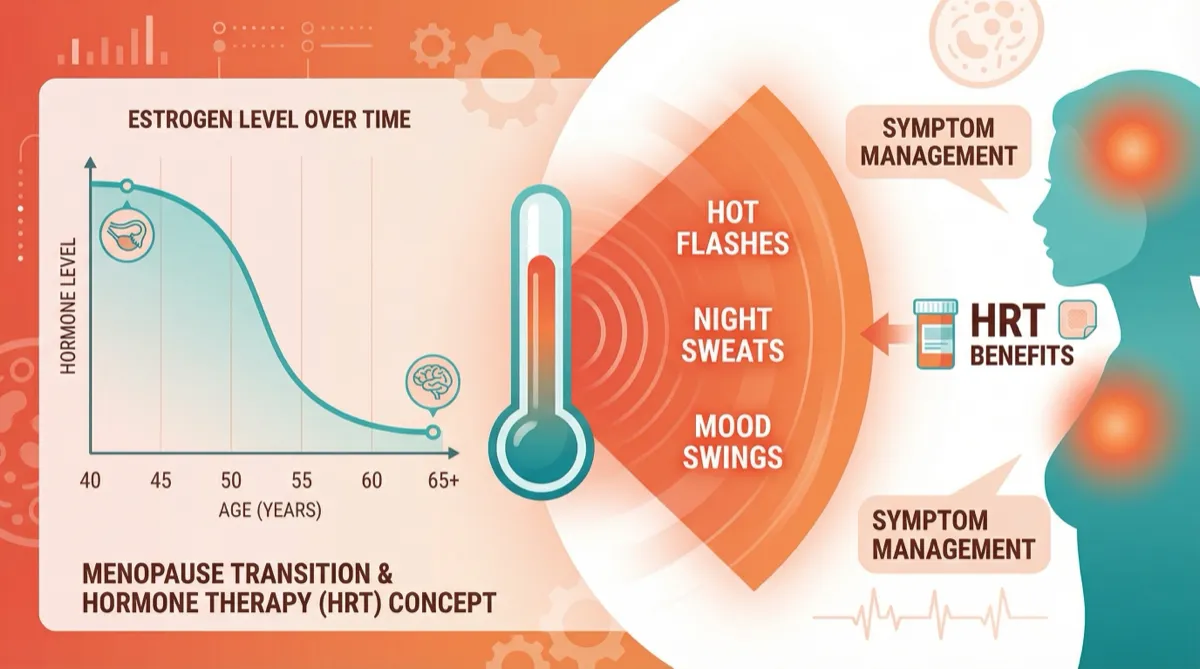
Menopause and hormone therapy statistics: what the data says about HRT in 2026
About 1.3 million U.S. women enter menopause each year, but only 4-5% of eligible women use hormone therapy. Here is what the WHI study actually found, what has changed since, and why the treatment gap persists.

Women's Wellness 12 min read
Sleep disorders in women: why insomnia hits harder and what the data shows
Women are 40% more likely to have insomnia than men, and the risk spikes during pregnancy and menopause. Here is what the research says about hormones, sleep apnea underdiagnosis, and the real cost of lost sleep.
Evidence in your inbox.
Join 250,000+ women receiving our weekly breakdown of new research, policy changes, and health tools.