Loading...
Healthcare Access14 min readUpdated
Women veterans' health statistics: who they are, what VA tracks, and where gaps remain
More than 2.1 million women Veterans live in the U.S., about 1 in 3 who use VA care disclose military sexual trauma, and pregnancies among VA-using women rose more than 80% from 2014 to 2022. Citable figures on population growth, enrollment, maternity care, and mental health.

Written By
Dr. Sarah Jenkins
Board Certified OB/GYN

Medically Reviewed By
Dr. Emily Chen
Chief Medical Officer
Share

She sat on the exam table in a civilian clinic with a folder of VA paperwork she had not opened in two years. Service-connected knee pain. A positive military sexual trauma screen she had never discussed with anyone. A pregnancy test she wanted confirmed before she decided whether to call the Women Veterans Call Center or keep going private. She was not asking for a lecture on benefits. She wanted to know whether anyone in the system still tracked women like her, and whether the numbers people cite about "women Veterans" actually described her generation.
They mostly do. Women are the fastest-growing segment of the U.S. Veteran population, and VA now publishes enough population, enrollment, and suicide data that a reporter on deadline can lift one clean figure with the source next to it. The hard part is knowing which figure, from which year, applies to which group: all living women Veterans, women enrolled in VA care, or women who actually used services that year.
This page is built for that distinction. Every statistic below comes from a primary federal source or a peer-reviewed study I opened and checked. Where the data are thinner than the headlines suggest, I say so.
Key takeaways
- More than 2.1 million women Veterans live in the United States. Between fiscal years 2000 and 2023 their share of the total Veteran population rose from 6.3% to 11.3%, according to VA's Office of Women's Health facts page (updated September 2025).
- In 2023, about 930,000 women Veterans were enrolled in VA health care (45.0% of women Veterans), and roughly 650,000 used VA medical care (70% of women enrollees), per the same VA facts compilation.
- About 1 in 3 women Veterans screened in VA health care report military sexual trauma, versus about 1 in 50 men, according to VA's March 2025 Military Sexual Trauma fact sheet.
- Pregnancies among women Veterans using VA care rose more than 80%, from 6,950 in 2014 to 12,524 in 2022, per a September 2023 VA maternity care announcement.
- The age-adjusted suicide rate among women Veterans fell 24.1% from 2021 to 2022, while the rate among non-Veteran women rose 5.2%, according to the 2024 National Veteran Suicide Prevention Annual Report.
1 in 3
women Veterans seen in VA health care report military sexual trauma when screened by their VA provider.
VA Military Sexual Trauma Fact Sheet, March 2025
2.1M
Women Veterans living in the U.S.
VA Office of Women's Health, 2025
45%
Women Veterans enrolled in VA health care (2023)
VA Facts and Statistics, 2025
+80%
Rise in VA-using pregnancies, 2014-2022
VA maternity care announcement, 2023
Women Veterans' health at a glance
- Living women Veterans
- More than 2.1 million (VA, 2023-2024 estimates)
- Share of all Veterans
- 11.3% in FY 2023; 11.7% in FY 2024 (VetPop2023)
- VA health care enrollment (women, 2023)
- ~930,000 (45.0% of women Veterans)
- VA medical care users (women, 2023)
- ~650,000 (70% of women enrollees)
- MST disclosure in VA screens
- ~1 in 3 women; ~1 in 50 men
- VA pregnancies
- 6,950 (2014) → 12,524 (2022)
| Year / period | Share of Veterans who are women |
|---|---|
| FY 2000 | 6.3% |
| FY 2023 | 11.3% |
| FY 2024 | 11.7% |
| FY 2043 (projected) | 17.2% |
| FY 2053 (projected) | 18.7% |
Source: VA Office of Women's Health Facts and Statistics (FY 2000-2023, 2043 projection); VetPop2023 Data Story (FY 2024 and FY 2053 projection). Projections are model estimates, not counts of living Veterans yet.
| Measure | Earlier period | Later period | Source |
|---|---|---|---|
| Pregnancies among women Veterans using VA care | 6,950 (2014) | 12,524 (2022) | VA maternity announcement, 2023 |
| VA-paid delivery hospitalizations | 2,567 (FY 2011) | 4,766 (FY 2020) | GAO-24-106209 |
| Severe maternal morbidity rate (per 10,000 deliveries) | 93.5 (FY 2011) | 184.6 (FY 2020) | GAO-24-106209 |
| Pregnancy-related deaths, VA-paid deliveries | 13 deaths among ~40,000 hospitalizations (FY 2011-2020) | GAO-24-106209 | |
Sources: VA Office of Public Affairs (maternity care expansion, Sept. 29, 2023); U.S. GAO report GAO-24-106209 (Jan. 16, 2024). SMM excludes blood-product transfusion-only cases under CDC definition used by GAO.
| Population / measure | Women | Men | Source |
|---|---|---|---|
| VA national clinical MST screen (Veterans in VA care) | ~1 in 3 | ~1 in 50 | VA MST Fact Sheet, March 2025 |
| Population-based veteran sample (MST positive) | 44.2% | 3.5% | Nichter et al., J Affect Disord, 2022 |
| Meta-analysis (harassment + assault) | 38.4% | 3.9% | Wilson, 2018 |
| Past-year PTSD prevalence (national sample) | 11.7% (women Veterans) | 6.7% (men Veterans) | Lehavot et al., AJPM, 2018 |
Sources: VA Mental Health MST Fact Sheet (March 2025); Nichter et al. 2022 (PubMed 35301038); Wilson 2018 meta-analysis (PubMed 30415636); Lehavot et al. 2018 (PubMed 29254558). Clinical screens and survey estimates are not interchangeable.
The fastest-growing segment of the Veteran population
Start with the denominator. VA's Office of Women's Health reports that more than 2.1 million women Veterans live in the United States today. Between fiscal years 2000 and 2023, women rose from 6.3% to 11.3% of the total Veteran population. The median age was 52 in 2023; about 22.5% were 65 or older.
VetPop2023 puts women at 11.7% of living Veterans in FY 2024 and projects 18.7% by FY 2053, with the absolute number of women staying near 2.1 million. The share grows mainly because men are projected to fall from about 15.8 million to 9.1 million. By 2043, VA projects 2.2 million women making up 17.2% of living Veterans. Absolute counts and percentages tell different stories; good reporting needs both.
Composition matters for access. In 2023, 68.6% of women Veterans (about 1.4 million) were White, 20.3% (420,000) Black or African American, and 10.3% (213,000) Hispanic or Latino of any race. In 2020, 43% of women who used VHA services belonged to a racial or ethnic minority group. Users are more diverse than the full living population. On the force pipeline, VA cites 2023 women service shares of 17.7% in the Army, 9.7% in the Marine Corps, 20.9% in the Navy, 21.5% in the Air Force and Space Force, and 21.9% in the Selected Reserves.
Who enrolls and who uses care
Enrollment is not the same as utilization. That distinction is the one I see reporters collapse most often.
In 2023, about 930,000 women Veterans were enrolled in VA health care (45.0% of women Veterans), versus 50.5% enrollment among men. Approximately 650,000 women sought VA medical care that year, 70.0% of women enrollees. More than half of living women Veterans are not enrolled. Among enrollees, nearly a third did not use medical care that year. Users, though, have tripled since 2001: from 159,810 to over 600,000, per VA's Office of Women's Health. That user count is the right companion to the 2.1 million living-population figure when the question is how many women VA is actually treating.
Enrollment accelerated after the PACT Act. Between May 2023 and May 2024, more than 53,000 women Veterans enrolled, a 20% increase over the prior year and the largest enrollment year for women on record. Gains hit all 50 states. The highest absolute counts were Texas (6,507), Florida (4,666), California (4,318), Virginia (3,806), Georgia (2,937), and North Carolina (2,776). The same release reported 717,141 women receiving disability compensation, up 28% over five years. Those numbers sit inside broader access barriers covered in our review of women's healthcare access disparities.
Gender-specific services inside VA
VA has spent two decades building women-specific infrastructure on a system designed around male patients. Every VA health care system now has a Women Veterans Program Manager, plus Women's Health Primary Care Providers, Maternity Care Coordinators, Women's Mental Health Champions, and Military Sexual Trauma Coordinators among other designated roles. On paper, maternity care is covered, MST-related care is free even without a service-connected rating, and coordination exists at every facility. Gender-specific services still do not appear automatically just because women enroll.
Capacity varies on the ground. A 2023 RAND synthesis noted that women account for roughly 30% of new VA patients while remaining a minority of total Veterans, which strains clinic design and staffing where few women are seen per day. Harassment of women at VA facilities remains a documented barrier; feeling unsafe in a waiting room is a clinical access issue. For day-to-day cycle questions while planning or avoiding pregnancy, our period calculator and ovulation calculator help at the practical layer. They do not replace VA maternity care or gynecology.
Military sexual trauma: the numbers that matter clinically
Military sexual trauma (MST) is VA's term for sexual assault or sexual harassment during military service. It is an experience, not a diagnosis; PTSD, depression, substance use, and chronic pain are what show up on problem lists.
VA screens every Veteran seen for health care. About 1 in 3 women and about 1 in 50 men respond "yes," per the March 2025 MST fact sheet. That is the figure I use first: it is current federal data on people already in care. Rates are higher among women, but absolute numbers of men with MST are substantial because the male Veteran population is much larger.
Research surveys find higher rates. Nichter and colleagues (2022), in the Journal of Affective Disorders, reported weighted MST prevalence of 44.2% among female Veterans and 3.5% among male Veterans. Women with MST histories had five-fold greater odds of current PTSD. A 2018 meta-analysis by Wilson put combined harassment-and-assault rates at 38.4% among women and 3.9% among men. The gap between screens and surveys is underreporting, not a rounding error. "1 in 3" describes VA clinical screens among users of care; "roughly two in five" tracks research estimates more broadly. Both can be true.
MST-related mental and physical care is free of charge. Veterans need not be service-connected or have reported the incident at the time. Every VA medical center has an MST Coordinator; counseling is also available through Vet Centers. Awareness of that benefit is still uneven. Patterns also cluster with other violence after service. See our intimate partner violence statistics for women.
Maternity care, pregnancies, and severe complications
Half of the roughly 600,000 women Veterans who use VA health care are of childbearing age, VA stated when it expanded maternity care coordination in 2023. Pregnancies among women Veterans using VA care rose more than 80% from 2014 to 2022, from 6,950 to 12,524. That is not a niche caseload.
Starting October 1, 2023, VA extended maternity care coordinator contact through 12 months postpartum, up from 8 weeks. Coordinators help with community delivery navigation, billing, childbirth education, lactation support, and follow-up screens. Delivery is almost always in the community under VA-paid care; coordination is the product that makes or breaks continuity.
Outcomes data are sobering. GAO (GAO-24-106209) found VA-paid delivery hospitalizations grew about 85%, from 2,567 in FY 2011 to 4,766 in FY 2020. Across roughly 40,000 hospitalizations from FY 2011-2020, 13 Veterans died from pregnancy-related causes. Severe maternal morbidity (excluding transfusion-only cases under the CDC definition GAO applied) rose from 93.5 per 10,000 deliveries in FY 2011 to 184.6 per 10,000 in FY 2020, highest among Black Veterans. Volume is rising faster than the quality dashboard, a pattern we also track in preventable maternal mortality and maternity care deserts.
Maternity care coordinators now screen for depression, suicide risk, and as of October 2023 anxiety and PTSD. GAO recommended systematic monitoring of screening completion; VA has since built dashboard infrastructure for that. Baseline PTSD and depression are higher among Veterans than civilians, which is why 12-month postpartum follow-up is more than a courtesy. Civilian benchmarks sit in our postpartum depression statistics.
Dr. Sarah Jenkins, OB/GYN
When a Veteran is pregnant, I treat the VA maternity care coordinator as part of the care team, not as optional navigation. The handoff between community obstetricians and VA primary care is where labs get lost, PTSD meds get stopped cold, and suicide risk goes unasked. Twelve months of coordination is the right window; the weak link is whether anyone actually uses it.
Mental health outcomes and suicide rates
Women Veterans carry a heavier mental health burden than both male Veterans and non-Veteran women on several measures that hold up across datasets.
In a nationally representative 2018 analysis in the American Journal of Preventive Medicine, Lehavot and colleagues found past-year PTSD of 11.7% among women Veterans, versus 6.7% among men Veterans and 6.0% among non-Veteran women. Lifetime PTSD was 13.4% among women Veterans versus 8.0% among civilian women (age- and race/ethnicity-adjusted). Depression rates also run higher among women than men Veterans across VA and survey analyses; exact percentages depend on whether the source uses diagnoses or self-report. RAND's 2023 synthesis summarized higher depression and eating-disorder burden without pretending one national rate settles it.
Suicide is the endpoint everyone watches. The 2024 National Veteran Suicide Prevention Annual Report found the age-adjusted suicide rate among women Veterans fell 24.1% from 2021 to 2022, while the rate among non-Veteran women rose 5.2%. Among women in VHA care, the decline was 29.6%. Firearm and suffocation rates each fell more than 30% in that window; firearm involvement in women Veteran suicide deaths dropped from 51.6% to 45.4%.
Those are real one-year improvements after two decades of climbing rates. They do not erase the long-standing elevation relative to non-Veteran women. The 2021-2022 decline is citable good news. The structural gap remains a clinical emergency. VA's service offers (free MST care, reproductive mental health, perinatal pathways, and the Veterans Crisis Line at 988, then press 1) are not outcome guarantees. Broader context sits in our women's mental health statistics.
What reporters should cite carefully
A few traps appear every time this topic cycles through the news.
Living population versus VA users. "2.1 million women Veterans" is not "2.1 million VA patients." Roughly 650,000 women used VA medical care in 2023. Enrollment versus use: 930,000 enrolled; 650,000 used care. Those are different questions. Clinical MST screens versus research: "1 in 3" is VA's clinical screen among women in care; "44%" is closer to population surveys. Label the source type. One-year suicide declines versus long-run elevation: the 24.1% drop from 2021 to 2022 is real and should be reported; prefer age-adjusted rates and name the comparison group. Maternity volume versus outcomes: rising pregnancies and rising SMM can coexist with better coordination policy.
One deadline sentence: more than 2.1 million women Veterans live in the United States, about 1 in 3 who use VA care disclose military sexual trauma, and pregnancies among VA-using women have risen more than 80% since 2014. Women remain under-enrolled relative to men. Severe maternal morbidity in VA-paid deliveries nearly doubled between FY 2011 and FY 2020.
The patient with the unopened folder eventually enrolled, kept the civilian obstetrician for delivery, and used a VA maternity care coordinator through the first postpartum year. That is what the architecture is for.
Frequently asked questions about women veterans' health statistics
How many women Veterans are there in the United States?
More than 2.1 million women Veterans live in the U.S., according to VA's Office of Women's Health. They made up 11.3% of all Veterans in FY 2023 and 11.7% in FY 2024 under VetPop2023 estimates. VA projects women will be 17.2% of living Veterans by 2043 and 18.7% by FY 2053 as the male Veteran population declines.
What share of women Veterans use VA health care?
In 2023, about 930,000 women Veterans (45.0% of women Veterans) were enrolled in VA health care, and roughly 650,000 sought VA medical care that year (70% of women enrollees), per VA facts and statistics. Enrollment among men was 50.5% of male Veterans. User counts have more than tripled since 2001, from 159,810 to over 600,000.
How common is military sexual trauma among women Veterans?
About 1 in 3 women Veterans screened in VA health care report MST, compared with about 1 in 50 men, according to VA's March 2025 fact sheet. Population-based research finds higher rates: Nichter et al. (2022) reported 44.2% among female Veterans, and a 2018 meta-analysis estimated 38.4% when harassment and assault are both counted.
Have pregnancies among women Veterans increased?
Yes. Pregnancies among women Veterans using VA care rose more than 80%, from 6,950 in 2014 to 12,524 in 2022, VA reported when expanding maternity care coordination. VA-paid delivery hospitalizations nearly doubled from 2,567 in FY 2011 to 4,766 in FY 2020, per GAO. About half of women VA users are of childbearing age.
What is the severe maternal morbidity rate for Veterans?
GAO found the SMM rate among VA-paid delivery hospitalizations rose from 93.5 per 10,000 in FY 2011 to 184.6 per 10,000 in FY 2020, highest among Black Veterans. From FY 2011 through FY 2020, 13 Veterans died from pregnancy-related causes among about 40,000 VA-paid delivery hospitalizations.
Are suicide rates among women Veterans rising or falling?
In the most recent one-year comparison in the 2024 National Veteran Suicide Prevention Annual Report, the age-adjusted suicide rate among women Veterans fell 24.1% from 2021 to 2022, while the rate among non-Veteran women rose 5.2%. Among women in VHA care, the decline was 29.6%. Long-run rates remain elevated relative to non-Veteran women despite that improvement.
Tags:Women VeteransVA Health CareMilitary Sexual TraumaMaternal HealthWomen's Health StatisticsHealthcare Access
Sources & Citations
- U.S. Department of Veterans Affairs, Office of Women's Health. (2025). Facts and statistics: women Veterans population, enrollment, and demographics.[Source]
- U.S. Department of Veterans Affairs, National Center for Veterans Analysis and Statistics. VetPop2023 Data Story: women Veterans estimates and projections through FY 2053.[Source]
- U.S. Department of Veterans Affairs. (2024, June 12). More than 50,000 women Veterans enrolled in VA health care over past 365 days.[Source]
- U.S. Department of Veterans Affairs, Office of Women's Health. About Us: women Veterans using VHA services tripled since 2001.[Source]
- U.S. Department of Veterans Affairs, Veterans Health Administration. (2025, March). Military Sexual Trauma fact sheet.[Source]
- Nichter B, Holliday R, Monteith LL, et al. (2022). Military sexual trauma in the United States: results from a population-based study. Journal of Affective Disorders, 306, 19–27.[Source]
- Wilson LC. (2018). The prevalence of military sexual trauma: a meta-analysis. Trauma, Violence, & Abuse. (PubMed summary: 38.4% of women when harassment and assault are both counted).[Source]
- U.S. Department of Veterans Affairs. (2023, September 29). VA expands maternity care coordination for Veterans.[Source]
- U.S. Government Accountability Office. (2024). Veterans Health: VA Should Improve Its Monitoring of Severe Maternal Complications and Mental Health Screenings (GAO-24-106209).[Source]
- U.S. Department of Veterans Affairs. (2024, December 19). VA releases 2024 National Veteran Suicide Prevention Annual Report.[Source]
- U.S. Department of Veterans Affairs. (2025, April 1). Preventing suicide among women Veterans.[Source]
- Lehavot K, Katon JG, Chen JA, Fortney JC, Simpson TL. (2018). Post-traumatic stress disorder by gender and veteran status. American Journal of Preventive Medicine, 54(1), e1–e9.[Source]
- Schultz D, Hunter KM, Skrabala L, Haynie JG. (2023). Improving support for veteran women: Veterans' issues in focus. RAND Health Quarterly / PMC10187554.[Source]
Cite this page
Journalists, researchers and educators are welcome to quote these figures. Please credit Women's Health Association and link to this page so readers can reach the underlying sources.
Women's Health Association. (2026, August 10). Women veterans' health statistics: who they are, what VA tracks, and where gaps remain. Retrieved from https://www.womenshealthassoc.com/insights/women-veterans-health-statistics
Published 2026, August 10

!
Medical Disclaimer
This content is for informational purposes only and is not a substitute for professional medical advice, diagnosis, or treatment. Always seek the advice of your physician or other qualified health provider with any questions you may have regarding a medical condition.
Keep Reading
View all articles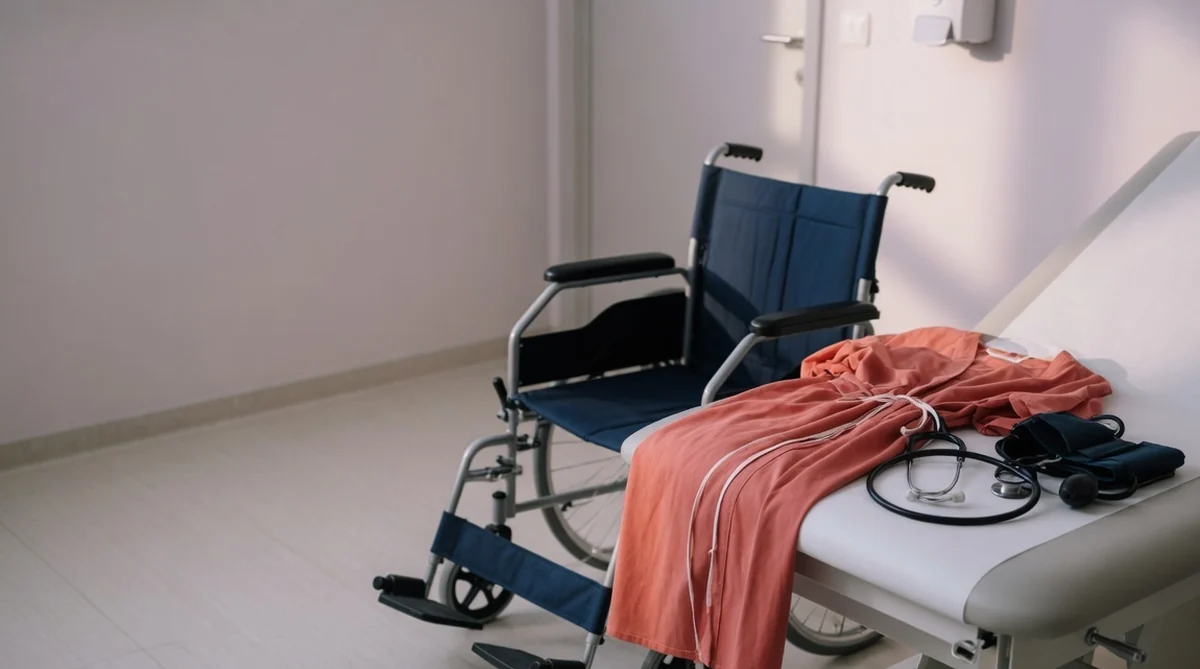
Healthcare Access 13 min read
Disability and women's healthcare access statistics: the screening, equipment, and maternal gaps that keep showing up
Women with disabilities are less likely to get mammograms and Pap tests, more likely to face inaccessible exam rooms, and in one NIH multi-hospital analysis faced 11 times the risk of maternal death. The equipment, training, and screening numbers in one place.

Healthcare Access 13 min read
Women physicians and the gender pay gap: why a majority pipeline still produces unequal pay
Women are 54.9% of U.S. medical students and 38.7% of active physicians, yet the adjusted physician pay gap returned to 26% in 2024. AAMC workforce data, Doximity compensation figures, and career-earnings research on specialty mix, leadership, full-professor rank, attrition, and burnout.

Healthcare Access 13 min read
Immigrant women's healthcare access statistics: uninsured rates, delayed prenatal care, and the chilling effect of enforcement
Nearly half of likely undocumented immigrant adults are uninsured. First-trimester prenatal care has fallen to 75.5% nationally. Language barriers, Emergency Medicaid for delivery, and chilling-effect research: the citable numbers in one place.
Evidence in your inbox.
Join 250,000+ women receiving our weekly breakdown of new research, policy changes, and health tools.