Loading...
Healthcare Access13 min readUpdated
Disability and women's healthcare access statistics: the screening, equipment, and maternal gaps that keep showing up
Women with disabilities are less likely to get mammograms and Pap tests, more likely to face inaccessible exam rooms, and in one NIH multi-hospital analysis faced 11 times the risk of maternal death. The equipment, training, and screening numbers in one place.

Written By
Dr. Sarah Jenkins
Board Certified OB/GYN

Medically Reviewed By
Dr. Emily Chen
Chief Medical Officer
Share
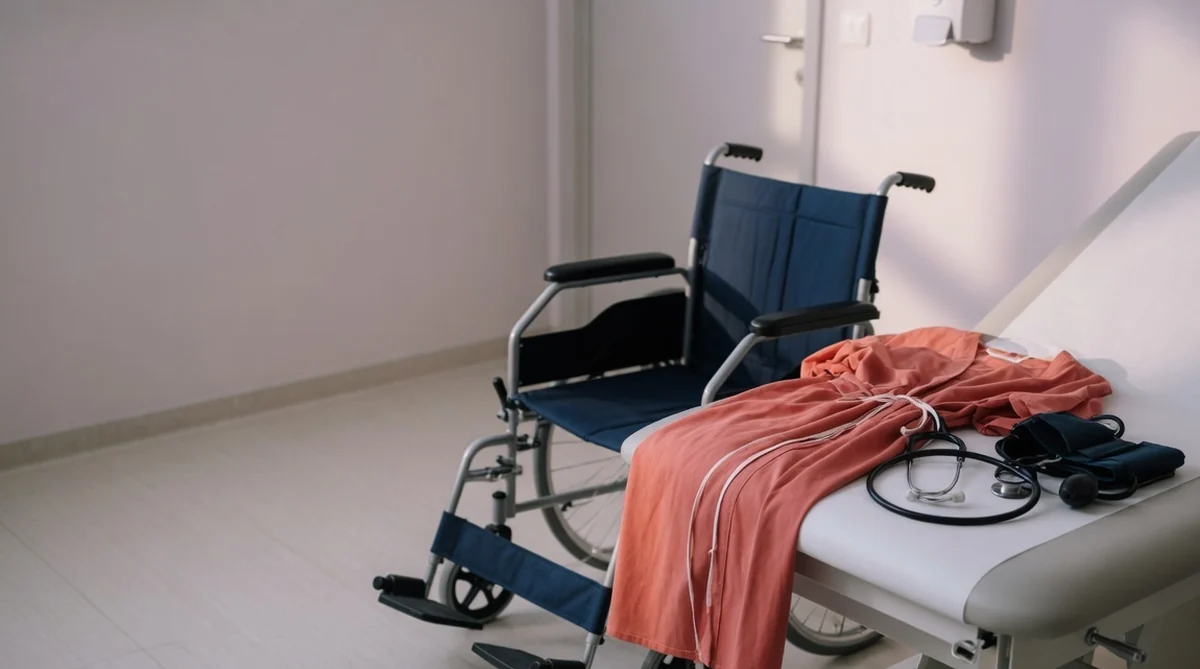
She had already waited three months for the appointment. When the tech walked her into the mammography suite, the machine could not drop low enough for her to stay seated in her wheelchair. Nobody had asked about transfer when she scheduled. The only height-adjustable table was on another floor, booked solid. They offered to "try a standing view" she could not hold. She left without images, still overdue for screening, and I only found out because her primary care note mentioned a "deferred mammogram secondary to equipment."
That is not an isolated logistics failure. It is what happens when a healthcare system designs exam rooms for one body type and then treats everyone else's needs as an exception. Women with disabilities are not a niche population. They are a large share of the patients who walk (or roll) into clinics for Pap tests, mammograms, prenatal visits, and the ordinary preventive care that is supposed to catch disease early.
The numbers in this article come from the CDC, NIH, the U.S. Access Board, peer-reviewed physician surveys, and KFF. I am putting them in one place because advocates and clinicians keep asking for the same four clusters of facts: screening gaps, equipment availability, maternal outcomes, and how prepared clinicians actually feel.
Key takeaways
- In 2023, 70.1% of U.S. women ages 50-74 with a disability were up to date on mammography, versus 81.3% of women without a disability, according to CDC analysis of the National Health Interview Survey.
- Among women with disabilities in BRFSS data, mammogram up-to-date rates fell from 72.1% in 2018 to 69.6% in 2020, and Pap test rates fell from 69.4% to 66.1% over the same period.
- In a study of about 2,400 California Medicaid primary care sites cited by the U.S. Access Board, only 8.4% had a height-adjustable exam table and fewer than 4% had an accessible weight scale.
- An NIH multi-hospital analysis found women with disabilities had 11 times the risk of maternal death and more than twice the risk of severe preeclampsia compared with women without disabilities.
- In a national survey of 714 physicians published in Health Affairs, only 40.7% were very confident they could provide equal quality care to patients with disability, and 82.4% believed people with significant disability have worse quality of life than nondisabled people.
11×
higher risk of maternal death for women with disabilities than for women without disabilities in an NIH multi-hospital analysis of 223,385 deliveries (2,074 women with disability).
NIH / NICHD summary of Gleason et al., JAMA Network Open, 2021
70.1%
Women with disabilities ages 50-74 up to date on mammography
CDC NHIS, 2023 (Sabatino et al.)
8.4%
California Medicaid primary care sites with height-adjustable exam tables
U.S. Access Board regulatory assessment
40.7%
Physicians very confident providing equal quality care to patients with disability
Iezzoni et al., Health Affairs, 2021
Disability and women's healthcare at a glance
- Adults with any disability
- More than 1 in 4 U.S. adults (CDC Disability Impacts All of Us)
- Mammography, ages 50-74, with disability
- 70.1% up to date (CDC NHIS 2023)
- Mammography, ages 50-74, no disability
- 81.3% up to date (CDC NHIS 2023)
- Cervical screening, ages 21-65, with disability
- 61.9% up to date (CDC NHIS 2023)
- Cervical screening, ages 21-65, no disability
- 76.3% up to date (CDC NHIS 2023)
- Height-adjustable exam tables (CA Medicaid PC sites)
- 8.4% of facilities
- Maternal death risk, women with disabilities
- 11 times higher (NIH/Gleason, JAMA Network Open 2021)
| Screening measure | With disability | Without disability |
|---|---|---|
| Mammogram within 2 years, ages 50-74 | 70.1% | 81.3% |
| Mammogram within 2 years, ages 40-49 | 51.8% | 62.8% |
| Cervical cancer screening up to date, ages 21-65 | 61.9% | 76.3% |
Source: Sabatino et al., Preventing Chronic Disease / CDC, National Health Interview Survey, 2023.
| Outcome | Relative risk / increase |
|---|---|
| Maternal death | 11 times higher |
| Severe preeclampsia | More than 2 times higher |
| Mild preeclampsia | 48% higher |
| Gestational diabetes | 25% higher |
| Thromboembolism | More than 6 times higher |
| Cardiovascular events | 4 times higher |
| Infection | Nearly 3 times higher |
| Hemorrhage | 27% higher |
Source: Gleason et al., JAMA Network Open, 2021; analysis of 223,385 deliveries in 19 U.S. hospitals (2,074 women with disability); NIH/NICHD news summary.
How common disability is among women
Before the screening and pregnancy numbers make sense, the denominator has to. According to the CDC's "Disability Impacts All of Us" materials, more than 1 in 4 U.S. adults has some type of disability across six functional domains: cognition, mobility, independent living, hearing, vision, and self-care. Mobility and cognitive limitations are among the most common. The 2016 BRFSS analysis in MMWR put the figure at one in four noninstitutionalized adults (about 61 million people then). Mobility was the most prevalent type at 13.7%. Women reported higher disability than men for most types.
That matters for women's health services because Pap tests, mammograms, pelvic exams, and prenatal care all assume a patient can transfer onto a table, stand for imaging, and complete a short visit without extra time or equipment. When those assumptions fail, the visit often fails too. The same access architecture described in our review of women's healthcare access statistics.
The preventive screening gap
The cleanest recent national snapshot of cancer screening by disability status comes from Sabatino and colleagues at CDC, who analyzed the 2023 National Health Interview Survey for Preventing Chronic Disease.
Among women ages 50 to 74, 70.1% with a disability were up to date on mammography, compared with 81.3% of women without a disability. That is an 11.2-percentage-point gap on the single best-studied early-detection test in women's oncology. Among women ages 40 to 49, a group that was already screening at lower rates overall, the figures were 51.8% with disability versus 62.8% without.
Cervical cancer screening shows a similar pattern. In the same 2023 NHIS analysis, 61.9% of women ages 21 to 65 with a disability were up to date on cervical screening, versus 76.3% of women without a disability. That 14.4-point gap is larger than the mammography gap in absolute terms. For context on how cervical screening behaves in the general population, see our cervical cancer and HPV screening statistics review; the disability gap sits on top of an already incomplete national picture.
The pandemic made the disability gap worse, not better. Rolle and colleagues analyzed BRFSS data for 2018 and 2020 and found that among women with disabilities, mammogram up-to-date rates fell from 72.1% to 69.6%, and Pap rates from 69.4% to 66.1%. Adjusted odds of mammogram adherence for women with disabilities, relative to women without, moved from 0.76 to 0.69; for Pap tests, from 0.73 to 0.59. Disability was already a barrier before COVID-19, and completed screening fell further during the disruption.
CDC's disability and breast cancer screening page still cites 2010 NHIS data showing about 61% of women with disabilities ages 50-74 receiving a mammogram in the past two years versus about 75% without. The gap is not new. Clinical literature and CDC guidance point to overlapping causes: inaccessible imaging equipment, transfer difficulty, short appointment slots, transportation, poverty, and provider assumptions that disabled women are not screening candidates.
Dr. Sarah Jenkins, OB/GYN
When a patient leaves without a mammogram because the machine will not drop low enough, that is not a "no-show." That is a system miss. I treat it the same way I treat a missed prenatal visit: document it, rebook with accommodations named in advance, and do not pretend the patient failed.
Equipment: the exam room still fails
Screening rates are the outcome. Equipment is often the mechanism.
The U.S. Access Board's final regulatory assessment for Medical Diagnostic Equipment Accessibility Standards is blunt about how rare accessible equipment has been. Citing a study of about 2,400 California primary care facilities serving Medicaid patients, the Board reported that only 8.4% had a height-adjustable examination table and less than 4% had a weight scale usable by patients with mobility limitations or who exceed standard scale limits. A manufacturer that participated in the Board's advisory process estimated that about 70% of U.S. examination rooms had only fixed-height tables.
Those fixed-height tables typically sit around 32 inches high. Fine if you can hop up, not fine if you transfer from a wheelchair seat near 17-19 inches. Access Board standards specify height-adjustable tables with a low transfer height in that range and a high of 25 inches, plus transfer supports and lift compatibility. Mammography machines used while seated need adjustable breast platforms and under-platform clearance. None of this is exotic engineering; it was optional design for a long time.
Patient experience data in the same assessment is hard to ignore. In a 2004 national consumer survey of people with disabilities, 75% rated examination tables as moderately difficult, extremely difficult, or impossible to use; 68% said the same of radiology equipment; 53% of weight scales; and 50% of examination chairs. Focus group participants described fear and embarrassment. Some said they would skip future appointments after unsafe transfers.
Federal rules have started to close the optionality. In 2024, HHS and the Department of Justice each finalized rules adopting Access Board medical diagnostic equipment standards. Under the DOJ Title II fact sheet, state and local government entities that use exam tables and weight scales must have at least one accessible unit of each by August 9, 2026. Parallel HHS Section 504 requirements for funded entities set a July 8, 2026 deadline. Whether those deadlines produce real exam-room change will take several more years of facility audits to answer. Until then, patients should call ahead about height-adjustable tables, wheelchair scales, and seated mammography. Clinicians should build those questions into scheduling scripts.
Maternal outcomes when disability meets pregnancy
The maternal data is the part of this file that still surprises colleagues who do not see many disabled pregnant patients. It should not.
In December 2021, NIH's Eunice Kennedy Shriver National Institute of Child Health and Human Development summarized a JAMA Network Open analysis by Gleason and colleagues of 223,385 deliveries in 19 U.S. hospitals, including 2,074 women with a physical, sensory, or intellectual disability. Compared with women without disabilities, women with disabilities had 11 times the risk of maternal death and more than twice the risk of severe preeclampsia. Mild preeclampsia was 48% higher. Gestational diabetes was 25% higher. Placenta previa was 52% higher, and premature rupture of membranes 16% higher. Hemorrhage was 27% higher. Thromboembolism was more than six times higher, cardiovascular events four times higher, infection nearly three times higher. Oxytocin labor stimulation, operative vaginal delivery, or cesarean delivery was 33% more likely.
Those are not small relative risks. Maternal death is rare in absolute terms in U.S. hospitals, which is why an 11-fold elevation is clinically loud. For broader context, see our maternal mortality statistics article; disability status is an axis national surveillance has measured less well than race and age.
A separate Ontario cohort by Brown and colleagues in JAMA Network Open (2021), covering more than 1.8 million births, found adjusted relative risks of severe maternal morbidity or death of 1.29 for physical disability, 1.14 for sensory disability, 1.57 for intellectual/developmental disability, and 1.74 for two or more disabilities. Maternal mortality was 13.9 deaths per 100,000 births among women with disabilities versus 7.7 among women without (minimally adjusted relative risk 1.77).
Mechanisms are mixed. Higher chronic disease and poverty at baseline matter. So do delayed prenatal care from physical access barriers and incomplete exams when providers are uncomfortable. Secondary conditions raise obstetric risk as well. The NIH summary also notes higher rates of smoking, substance use, and depression: factors that often reflect incomplete preventive and mental health access, not personal failure. What the data does not support is the myth that women with disabilities rarely become pregnant. For many disability groups, pregnancy rates are roughly comparable to nondisabled peers. The difference is risk, not rarity. Baseline hypertensive disease numbers are in our preeclampsia and pregnancy complications statistics; the disability multipliers sit on top of those rates.
What physicians say about their own preparedness
Equipment gaps are visible. Training gaps hide inside the clinician's head until a survey asks directly.
Iezzoni and colleagues surveyed 714 U.S. physicians across seven specialties, including obstetrics and gynecology, in a national NIH-funded study published in Health Affairs in 2021. Only 40.7% felt very confident they could provide the same quality of care to patients with disability as to patients without. Just 56.5% strongly agreed they welcome patients with disability into their practices. Most, 82.4%, said people with significant disability have worse quality of life than nondisabled people. Only 18.1% strongly agreed that people with disability are often treated unfairly in the healthcare system.
Read those four findings together. A large majority of physicians believe disabled patients have worse lives, a minority are fully confident they can deliver equal care, barely half strongly welcome those patients, and few strongly recognize systemic unfairness. That combination is consistent with under-screening, incomplete exams, and the "exam from the wheelchair" pattern disability advocates have described for years. Related Iezzoni survey reporting has also noted that 35% of physicians named lack of formal education or training as a large or moderate barrier. Hard to defend when more than one in four adults reports a disability.
The fix is not a mystery. Disability-specific training improves knowledge and comfort in programs that have been studied. CDC guidance for clinicians caring for women with disabilities recommends training on functional assessment, sexual and reproductive history-taking, and accessible exam technique. Most of us did not get enough of that in school, and few have remediated it since.
Source: Iezzoni et al., Health Affairs, 2021; national survey of 714 practicing U.S. physicians.
What patients report in the exam room
Physician self-report is one side of the exam room. Patient report is the other.
The 2022 KFF Women's Health Survey found that among women who had seen a provider in the past two years, 36% of women with a disability or ongoing health condition said a provider had dismissed their concerns, compared with 22% of women without. Forty-five percent of women with a disability or ongoing condition reported at least one of four negative interactions: dismissed concerns, disbelief, assumptions made without asking, or being told they were personally to blame for a health problem.
Dismissal is not a soft quality metric. It is how delayed cancer workups and incomplete obstetric risk assessments start, and how patients learn not to return. When a disabled woman reports pelvic pain, abnormal bleeding, or a missed period and is told it is "probably just the disability," the diagnostic path closes before it opens. For patients tracking cycle changes after incomplete visits, tools such as our period calculator and ovulation calculator can document patterns. They do not replace a clinician who takes the history seriously.
CDC materials for women with disabilities list the same barriers patients describe in clinic: stereotyping, lack of provider knowledge, physical barriers with tables and scales, transfer difficulty, and inaccessible bathrooms and parking. None of that requires new science. It requires implementation. Breast cancer screening sits at the intersection: equipment that will not lower, staff uncomfortable with transfer, and a 2023 NHIS mammography rate more than 11 points below nondisabled peers. Our breast cancer screening statistics page covers general-population rates; the disability gap is the piece too often left out.
The solution is not a single device purchase or one CME module. The numbers point to a stack: buy the table and the scale, train the staff, schedule longer visits when transfer is needed, document accommodations, and stop treating reproductive and preventive care for disabled women as optional. The 2026 equipment deadlines will force some of that. The maternal death and screening gaps suggest the rest cannot wait for another survey cycle.
Frequently asked questions about disability and women's healthcare access
How common is disability among U.S. adults?
According to the CDC's Disability Impacts All of Us materials, more than 1 in 4 U.S. adults has some type of disability. Earlier BRFSS-based CDC analyses put the figure near one in four, or about 61 million adults, with mobility among the most common disability types. Women report higher prevalence than men for most disability categories.
Are women with disabilities less likely to get mammograms?
Yes. In 2023 National Health Interview Survey data analyzed by CDC researchers, 70.1% of women ages 50-74 with a disability were up to date on mammography, compared with 81.3% of women without a disability. Among women ages 40-49, rates were 51.8% versus 62.8%. Older CDC materials using 2010 NHIS data showed a similar direction, with about 61% versus 75%.
How large is the cervical cancer screening gap?
In the same 2023 NHIS analysis, 61.9% of women ages 21-65 with a disability were up to date on cervical cancer screening, versus 76.3% of women without a disability. BRFSS analyses also found Pap test rates among women with disabilities fell from 69.4% in 2018 to 66.1% in 2020 during the COVID-19 period.
How common is accessible exam equipment?
A study of about 2,400 California Medicaid primary care facilities, cited by the U.S. Access Board, found only 8.4% had a height-adjustable examination table and less than 4% had an accessible weight scale. A manufacturer estimate shared with the Board put fixed-height-only tables in about 70% of U.S. examination rooms. New HHS and DOJ rules set 2026 deadlines for covered entities to field at least one accessible table and scale.
Do women with disabilities face higher maternal risks?
Yes. An NIH-summarized multi-hospital analysis of 223,385 deliveries (2,074 women with disability) found women with disabilities had 11 times the risk of maternal death, more than twice the risk of severe preeclampsia, and elevated risks for hemorrhage, infection, thromboembolism, and cardiovascular events. A large Ontario cohort found adjusted relative risks of severe maternal morbidity or death ranging from 1.14 to 1.74 depending on disability type.
How prepared do physicians feel to care for patients with disabilities?
In a national survey of 714 physicians published in Health Affairs in 2021, only 40.7% were very confident they could provide equal quality care to patients with disability, and just 56.5% strongly agreed they welcome disabled patients into their practices. Meanwhile, 82.4% believed people with significant disability have worse quality of life than nondisabled people.
Tags:DisabilityHealthcare AccessCancer ScreeningMaternal HealthWomen's Health Statistics
Sources & Citations
- Sabatino SA, Thompson TD, Croswell JM, et al. (2025). Use of Cancer Screening Tests, United States, 2023. Preventing Chronic Disease. CDC.[Source]
- Rolle LD, Chery MJ, Larson M, et al. (2024). The Effect of Disability and Social Determinants of Health on Breast and Cervical Cancer Screenings During the COVID-19 Pandemic. Preventing Chronic Disease. CDC.[Source]
- CDC. Women with Disabilities and Breast Cancer Screening. Disability and Health. Updated April 14, 2025.[Source]
- CDC. Disability Impacts All of Us Infographic. Disability and Health. Updated May 5, 2026.[Source]
- Okoro CA, Hollis ND, Cyrus AC, Griffin-Blake S. (2018). Prevalence of Disabilities and Health Care Access by Disability Status and Type Among Adults — United States, 2016. MMWR.[Source]
- U.S. Access Board. (2016). Final Regulatory Assessment: Medical Diagnostic Equipment Accessibility Standards (36 CFR Part 1195).[Source]
- Iezzoni LI, Rao SR, Ressalam J, et al. (2021). Physicians' Perceptions Of People With Disability And Their Health Care. Health Affairs. PMC8722582.[Source]
- Gleason JL, et al. (2021). Risk of adverse maternal outcomes in pregnant women with disabilities. JAMA Network Open. NIH/NICHD summary.[Source]
- Brown HK, et al. (2021). Association of Preexisting Disability With Severe Maternal Morbidity or Mortality in Ontario, Canada. JAMA Network Open. PMC7871190.[Source]
- Long M, Frederiksen B, Ranji U, Diep K, Salganicoff A. (2023). Women's Experiences with Provider Communication and Interactions in Health Care Settings: Findings from the 2022 KFF Women's Health Survey. KFF.[Source]
- U.S. Department of Justice. (2024). Fact Sheet: New Rule on the Accessibility of Medical Diagnostic Equipment. ADA.gov.[Source]
- CDC. Supporting Women with Disabilities to Achieve Optimal Health. Women's Health Features.[Source]
Cite this page
Journalists, researchers and educators are welcome to quote these figures. Please credit Women's Health Association and link to this page so readers can reach the underlying sources.
Women's Health Association. (2026, August 10). Disability and women's healthcare access statistics: the screening, equipment, and maternal gaps that keep showing up. Retrieved from https://www.womenshealthassoc.com/insights/disability-womens-healthcare-access-statistics
Published 2026, August 10

!
Medical Disclaimer
This content is for informational purposes only and is not a substitute for professional medical advice, diagnosis, or treatment. Always seek the advice of your physician or other qualified health provider with any questions you may have regarding a medical condition.
Keep Reading
View all articles
Healthcare Access 13 min read
Women physicians and the gender pay gap: why a majority pipeline still produces unequal pay
Women are 54.9% of U.S. medical students and 38.7% of active physicians, yet the adjusted physician pay gap returned to 26% in 2024. AAMC workforce data, Doximity compensation figures, and career-earnings research on specialty mix, leadership, full-professor rank, attrition, and burnout.

Healthcare Access 13 min read
Immigrant women's healthcare access statistics: uninsured rates, delayed prenatal care, and the chilling effect of enforcement
Nearly half of likely undocumented immigrant adults are uninsured. First-trimester prenatal care has fallen to 75.5% nationally. Language barriers, Emergency Medicaid for delivery, and chilling-effect research: the citable numbers in one place.

Healthcare Access 14 min read
LGBTQ+ women's health disparities: screening gaps, coverage divides, and the mental health toll
More than half of bisexual women had any mental illness in the past year. Lesbian and bisexual women lag on cervical screening, rely more heavily on Medicaid, and report twice the rate of unfair treatment by providers. The primary sources, side by side.
Evidence in your inbox.
Join 250,000+ women receiving our weekly breakdown of new research, policy changes, and health tools.