Loading...
Pregnancy & Maternal14 min readUpdated
Maternity care deserts: 1 in 3 U.S. counties has no obstetric clinician at all
More than a third of U.S. counties have no birthing facility and no obstetric clinician. Here is what the data on hospital closures, the OB-GYN workforce shortage, drive times, and maternal death tells us about where American women can still give birth.

Written By
Dr. Sarah Jenkins
Board Certified OB/GYN

Medically Reviewed By
Dr. Emily Chen
Chief Medical Officer
Share
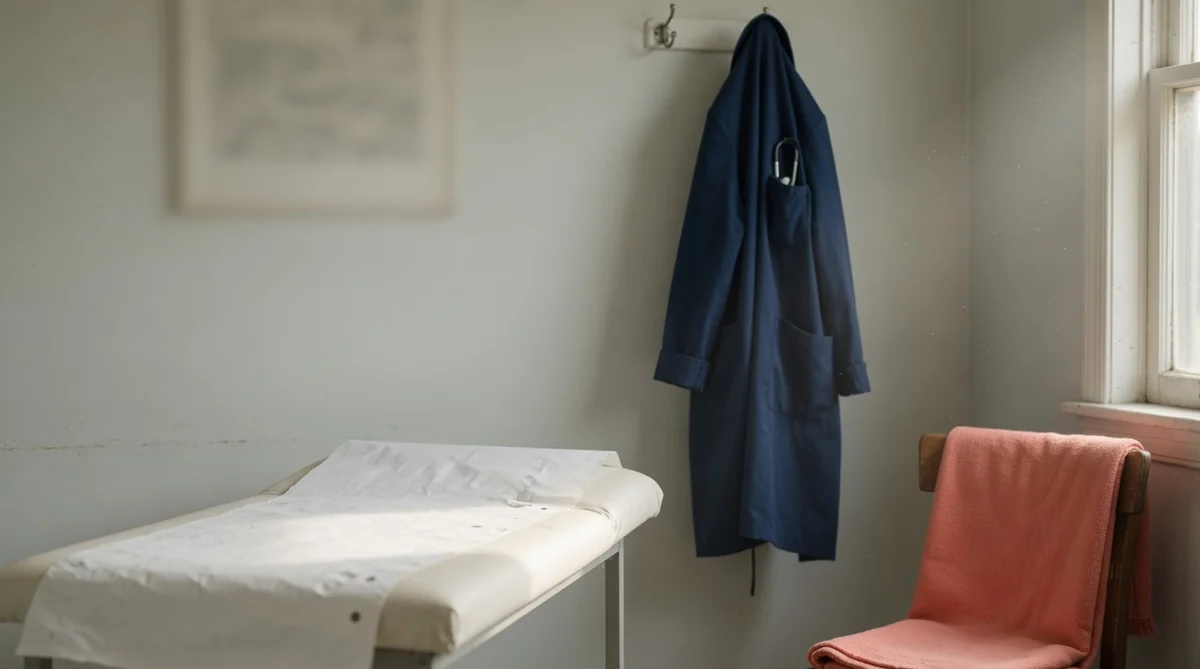
She was 34 weeks along and had already made the drive four times that month. Her county lost its labor and delivery unit two years earlier, so every prenatal visit meant an hour and ten minutes each way on a two-lane road. She packed a bag at 32 weeks, not because anything worried her but because she had done the arithmetic. If her water broke at three in the morning in February, the drive was the plan. There was no second plan.
Her chart said low risk. That is the part that gets lost. Geography is its own risk factor, and a growing share of American women now carry it into pregnancy regardless of how healthy they are.
The March of Dimes calls these places maternity care deserts: counties with no birthing facility and no obstetric clinician of any kind. Not a shrinking unit, not an understaffed one. Nothing. Its 2024 report, using 2022 data, found that 35.1% of U.S. counties meet that definition, or 1,104 counties. A 2026 review in Seminars in Perinatology put the human total on that map: more than 2.3 million reproductive-aged women, and over 150,000 births a year.
What follows is what the current data shows: how many counties qualify, how many hospitals have dropped obstetrics, what the federal government projects for OB-GYN supply, and what distance appears to do to outcomes.
Key takeaways
- 35.1% of U.S. counties (1,104 counties) are maternity care deserts with no birthing facility and no obstetric clinician, according to the March of Dimes 2024 report. Counting counties with limited access as well, more than 5.5 million women are affected.
- 52.4% of rural hospitals did not offer obstetric care in 2022, up from 43.1% in 2010, per a 2025 JAMA analysis by Kozhimannil and colleagues. Over that span 537 hospitals dropped obstetrics and only 26 rural hospitals added it.
- More than 10.1 million women, including 4 million of childbearing age, lived in counties with no OB-GYN physician in 2023, according to HRSA's December 2025 maternal health workforce brief.
- HRSA projects a national shortage of 7,660 OB-GYNs by 2038, with nonmetro supply meeting just 54% of demand compared with 89% in metro areas.
- Maternal mortality in desert counties was 32.25 per 100,000 live births versus 23.62 in full-access counties in a 2025 Obstetrics & Gynecology study, an adjusted incidence rate ratio of 1.36.
35.1%
Of U.S. counties are maternity care deserts
March of Dimes, 2024
52.4%
Of rural hospitals offer no obstetric care
JAMA, 2025
28.1 mi
Average drive to an obstetric hospital in a desert
BMC Pregnancy and Childbirth, 2024
Maternity care access at a glance
- Definition
- A county with no birthing facility and no obstetric clinician (March of Dimes)
- Counties affected
- 1,104 of roughly 3,144 (35.1%)
- Women affected
- 2.3 million of reproductive age in full deserts; 5.5 million counting limited-access counties
- Births involved
- More than 150,000 a year (Seminars in Perinatology, 2026)
- Rural hospitals without obstetrics
- 52.4% in 2022, up from 43.1% in 2010 (JAMA)
- Projected OB-GYN shortfall
- 7,660 physicians by 2038; 54% of nonmetro demand met (HRSA)
- Maternal mortality gap
- 32.25 vs 23.62 deaths per 100,000 live births (Obstetrics & Gynecology, 2025)
How many counties are maternity care deserts
The headline number from the March of Dimes report Nowhere to Go is that over one third of counties in the United States, 35.1%, have neither a birthing facility nor a single obstetric clinician. That is 1,104 counties out of roughly 3,144.
What makes that figure land is the population inside it. The peer-reviewed overview published in Seminars in Perinatology in 2026 reported that those counties contain more than 2.3 million reproductive-aged women and account for over 150,000 births annually. Those births still happen. They happen somewhere else, after a drive, or occasionally in a car.
The desert definition is also deliberately strict. A county with one overwhelmed unit and no obstetrician on call after 6 p.m. does not qualify. When the March of Dimes widened the lens in its 2024 news release to include limited-access counties alongside full deserts, the affected population more than doubled: more than 5.5 million women live in counties with no or limited access to maternity care services.
County-level measurement has real limits, which is the standing criticism of this body of work. County lines are not travel patterns. A woman at the edge of a desert county may be twenty minutes from a hospital across the border, while a woman in an enormous county with one hospital in the far corner is counted as covered and is still two hours away. What the metric captures well is trend, and every dataset points the same way.
The closures behind the map
Deserts are the residue of closures, and the closure data is where this gets concrete.
Katy Kozhimannil and colleagues published a national accounting in JAMA in early 2025 covering every U.S. hospital from 2010 through 2022. In 2010, 43.1% of rural hospitals and 29.7% of urban hospitals did not offer obstetric care. By 2022, those figures were 52.4% and 35.7%. A majority of rural hospitals in this country no longer deliver babies.
The flow behind those percentages is the more striking part. Over those twelve years, 537 hospitals lost obstetrics, split between 238 rural and 299 urban facilities. In the same period 138 hospitals gained obstetric services, 112 of them urban. Twenty-six rural hospitals in the entire country added obstetric care in twelve years. That is not a system in flux. It is a system moving one way with a rounding error moving the other.
The University of Minnesota Rural Health Research Center, which tracks this for the federal Office of Rural Health Policy, extended the count through 2023 and framed it by county rather than by hospital. Its 2026 state-by-state report found that 269 of the 3,144 U.S. counties, or 8.6%, lost all hospital-based obstetric services during that window. By 2023, 60% of rural counties and 38% of urban counties had none at all.
Dr. Sarah Jenkins, OB/GYN
When a unit closes, the skills leave with it. The nurses who could recognize a shoulder dystocia in ten seconds move to med-surg or leave town. You cannot reopen a labor and delivery floor the way you reopen a clinic, even if the funding appeared tomorrow. Rebuilding that team takes years, which is why almost no rural hospital does it.
The OB-GYN workforce math
Buildings are half of it. The other half is whether anyone is there to staff them.
HRSA's National Center for Health Workforce Analysis published its State of the U.S. Maternal Health Workforce brief in December 2025, using 2023 data. It found that 10,139,368 women lived in U.S. counties with no OB-GYN physicians, of whom 4,043,632 were of childbearing age, 15 to 49. That is 6.0% of all women in the country and 5.3% of women of childbearing age.
The same brief looked forward, and the projection is the number worth remembering. HRSA models a national shortage of 7,660 OB-GYN physicians by 2038, with supply meeting 86% of demand. A 14% national gap sounds survivable until you split it geographically. In 2038, metro areas are projected to meet 89% of demand. For nonmetro areas, that figure is 54%.
A rural America staffed at roughly half the obstetric physician supply it needs is not a shortage in the usual sense of longer waits. It is a different model of care by default, leaning on family physicians, nurse-midwives, and transfer agreements where those exist.
The federal shortage-designation system shows the same terrain more broadly. HRSA's Data Warehouse quarterly summary, current as of June 30, 2026, counts 9,003 primary care Health Professional Shortage Area designations covering 108,566,500 people, with 47.43% of need met and 18,541 additional practitioners required. Rural designations make up 5,521 of that total, 61.32%, covering 28.9 million people and needing 4,965 practitioners on their own.
Georgia is the example that keeps surfacing in state coverage, and HRSA's own table gives the harder version: 245 primary care shortage-area designations covering 2,781,611 people, with 39.13% of need met and 573 practitioners needed. Primary care shortage areas are not obstetric shortage areas and the two should not be conflated. But rural prenatal care is frequently delivered by family physicians rather than obstetricians, so the two gaps tend to sit on top of each other.
How far women have to drive
A 2024 analysis in BMC Pregnancy and Childbirth mapped travel to the nearest obstetric hospital across the country. Nationally, the mean distance was 8.3 miles and the mean drive time 14.1 minutes. In maternity care deserts, those figures were 28.1 miles and 36.5 minutes.
Averages soften things. A 2025 paper in the Journal of the American Board of Family Medicine gave the distribution instead: 50% of women in rural communities, compared with 7% of women in urban areas, must travel more than 30 minutes to reach an obstetric hospital.
Thirty-six minutes on a clear afternoon is an inconvenience. The clinical problem is that obstetric emergencies do not schedule themselves for clear afternoons. Postpartum hemorrhage, cord prolapse, placental abruption, and eclamptic seizures are measured in minutes, and the interventions for them live inside a hospital with an operating room and blood products.
Distance also reshapes prenatal care long before any emergency. When each visit costs three hours and a tank of gas, visits get skipped, and the conditions that depend on serial monitoring, like gestational diabetes and rising blood pressure, are exactly the ones that suffer when the schedule slips.
What the distance does to outcomes
The outcome data has caught up with the access data, and it is not reassuring.
Atwani and colleagues published an analysis in Obstetrics & Gynecology, the ACOG journal, in 2025, using national data from 2018 to 2021. Desert counties compared with full-access counties showed maternal mortality of 32.25 versus 23.62 deaths per 100,000 live births, an adjusted incidence rate ratio of 1.36 (95% CI, 1.21 to 1.54). Pregnancy-related mortality followed the same pattern at 43.82 versus 34.72 per 100,000, an adjusted rate ratio of 1.26 (95% CI, 1.13 to 1.41).
The word "adjusted" is doing real work there. Counties without obstetric care differ from counties with it in ways that independently affect maternal death: income, insurance status, chronic disease burden. The authors adjusted for a set of those factors and the association held, which is meaningful evidence rather than proof of causation. For the fuller picture, our analysis of preventable maternal deaths covers the causes review committees identify.
The March of Dimes reported a related finding in the 2024 release: women in maternity care deserts face a 13% higher risk of preterm birth. That is the outcome I would expect to move first, because it responds to the density of prenatal contact more than almost anything else in obstetrics. Blood pressure checked at every visit catches preeclampsia earlier, and earlier catches sometimes mean a pregnancy that reaches term.
Why obstetric units close
Administrators rarely close an obstetric unit because they want to. They close it because obstetrics is the hardest service line in a small hospital to keep open.
Labor and delivery has to be staffed around the clock whether two babies are born that month or twenty. It needs nurses trained in fetal monitoring and neonatal resuscitation, anesthesia coverage that can be in the room fast for an emergency cesarean, and surgical capability that cannot be shared with a clinic schedule. Liability premiums for obstetrics are among the highest in medicine. In a county with a few dozen births a year, no amount of good intention makes that arithmetic work.
Payment is the other half. KFF reported in May 2025 that Medicaid finances 47% of rural births. When roughly half your obstetric revenue comes from the payer with the lowest reimbursement rates, a low-volume unit runs at a loss the rest of the hospital has to absorb, which is why obstetrics is often the first line cut.
The effect is self-reinforcing. Once a unit closes, local families route prenatal care to the receiving hospital an hour away, which pulls volume from whatever obstetric presence is left in the county. The desert widens from the inside.
What is changing in 2026
Three things are worth watching this year, and none of them has resolved.
The first is playing out in Maine. On August 6, 2026, the MaineHealth board voted to close the birthing center at Lincoln Hospital in Damariscotta, effective December 18, over a grassroots campaign, a lawsuit from a patient due to deliver in January, and a letter from the governor asking for a delay. As the Portland Press Herald reported, it is the twelfth birthing unit to close in Maine since 2015, and it leaves Lincoln, Waldo and Sagadahoc counties without one. Damariscotta has the shape of the fight nearly everywhere: a community that can demonstrate need against a health system that can demonstrate the unit loses money, and no mechanism to reconcile the two.
The second is money. CMS confirmed in late December 2025 that all 50 states applied for and will receive awards from the $50 billion Rural Health Transformation Program created by H.R. 1. KFF's analysis found the fund offsets roughly 37% of the approximately $137 billion in projected rural Medicaid cuts over a decade. Whether any of it goes toward keeping obstetric units staffed is a state-by-state decision being made right now.
The third is the designation system itself. HRSA's 2025 National Shortage Designation Update placed a batch of existing shortage-area designations in "Proposed for Withdrawal" status and extended the state review timeline. Designations are not academic labels. They unlock National Health Service Corps loan repayment and Medicare bonus payments, which are among the few levers that move clinicians into underserved counties.
State mapping is filling in alongside the federal picture. The Center for Rural Pennsylvania reported in January 2026 that 23 of Pennsylvania's 67 counties, all of them rural, have no hospital labor and delivery unit. Eight of those counties sit next to one another, forming a contiguous block of more than 6,000 square miles (larger than Connecticut) with no inpatient obstetric care in it.
If you live in a maternity care desert
No individual patient can fix this, and I am wary of articles that hand a structural problem back to the person living inside it. Still, a few things help, and I raise them at first prenatal visits with patients who drive.
Settle at that first visit where you will actually deliver, and time the drive yourself in bad weather instead of trusting a mapping app. Ask what happens if you present in labor to the closest emergency department, because that facility should have a transfer protocol and you should know it. If your pregnancy has any complicating feature, ask early whether your delivery hospital has the level of neonatal care you might need.
Ask which visits can be done by telehealth or with a blood pressure cuff at home and which genuinely require you in the room. Many practices got good at this after 2020, and it can halve a schedule of long drives without cutting monitoring.
If you are planning a pregnancy, knowing your own cycle makes that first visit easier to date accurately, which matters more when appointments are scarce. Our ovulation calculator and period calculator establish that baseline, and the IVF due date calculator covers transfer-based dating. Our piece on disparities in women's healthcare access covers the barriers that intersect with geography, and the data on postpartum depression is worth reading before you deliver, since the drive does not get shorter once the baby is here.
The women in these 1,104 counties are getting a version of maternity care that most of the country would not accept, and the trend line in every dataset cited here has moved the wrong way for more than a decade.
Frequently asked questions about maternity care deserts
What is a maternity care desert?
The March of Dimes defines a maternity care desert as a county with no birthing facility and no obstetric clinician of any kind, including obstetricians, family physicians who deliver babies, and certified nurse-midwives. It is a strict definition. Counties with a single overburdened unit or part-time coverage are classified as limited access rather than as full deserts.
How many U.S. counties are maternity care deserts?
1,104 counties, or 35.1% of all U.S. counties, were maternity care deserts in the March of Dimes 2024 report using 2022 data. Those counties are home to more than 2.3 million reproductive-aged women and account for over 150,000 births a year, according to a 2026 review in Seminars in Perinatology. Counting limited-access counties too, more than 5.5 million women are affected.
Do maternity care deserts affect maternal death rates?
A 2025 study in Obstetrics & Gynecology using 2018 to 2021 data found maternal mortality of 32.25 per 100,000 live births in desert counties versus 23.62 in full-access counties, an adjusted incidence rate ratio of 1.36. Pregnancy-related mortality showed a similar gap. The association persisted after adjustment, though county-level differences in income and health status likely contribute.
How far do women in maternity care deserts travel to give birth?
A 2024 analysis in BMC Pregnancy and Childbirth found a mean of 28.1 miles and 36.5 minutes to the nearest obstetric hospital in maternity care deserts, compared with 8.3 miles and 14.1 minutes nationally. A 2025 Journal of the American Board of Family Medicine paper reported that 50% of rural women travel more than 30 minutes, versus 7% of urban women.
Is there an OB-GYN shortage in the United States?
Yes, and it is concentrated rurally. HRSA's December 2025 workforce brief projects a national shortage of 7,660 OB-GYN physicians by 2038, with supply meeting 86% of demand. Metro areas are projected to reach 89% of demand while nonmetro areas reach 54%. In 2023, more than 10.1 million women already lived in counties with no OB-GYN physician.
Why are rural hospitals closing labor and delivery units?
Obstetric units must staff nursing, anesthesia, and surgical coverage around the clock regardless of birth volume, and they carry high liability costs. KFF reported in May 2025 that Medicaid finances 47% of rural births, and Medicaid pays less than commercial insurance. In 2022, 52.4% of rural hospitals offered no obstetric care, up from 43.1% in 2010, per JAMA.
Tags:Maternity Care DesertsRural HealthPregnancyHealth DisparitiesWomen's Health Statistics
Sources & Citations
- March of Dimes. (2024). Nowhere to Go: Maternity Care Deserts Across the US. PeriStats report (2022 data).[Source]
- March of Dimes. (2024). Maternity Care Desert Report Reveals Millions Unable to Access Care. News release, September 10, 2024.[Source]
- Nowhere to go: An overview of maternity care access across the U.S. (2026). Seminars in Perinatology, 50(1), 152188.[Source]
- Kozhimannil KB, et al. (2025). Obstetric Care Access at Rural and Urban Hospitals in the United States. JAMA, 333(2), 166–169.[Source]
- University of Minnesota Rural Health Research Center. (2026). Availability of Hospital-Based Obstetric Services in the United States by County, 2010–2023: A State-by-State Report.[Source]
- HRSA National Center for Health Workforce Analysis. (2025). State of the U.S. Maternal Health Workforce. December 2025.[Source]
- HRSA Data Warehouse. (2026). Designated Health Professional Shortage Areas Statistics, quarterly summary, data as of June 30, 2026.[Source]
- Atwani R, et al. (2025). Association of Maternity Care Deserts With Maternal and Pregnancy-Related Mortality. Obstetrics & Gynecology, 146(2), 181–188.[Source]
- Navigating geographical disparities: access to obstetric hospitals in maternity care deserts and across the United States. (2024). BMC Pregnancy and Childbirth.[Source]
- Maternity Care Deserts: Key Drivers of the National Maternal Health Crisis. (2025). Journal of the American Board of Family Medicine.[Source]
- Portland Press Herald. (2026). MaineHealth board votes to close birthing center at Lincoln Hospital in Damariscotta. August 6, 2026.[Source]
- CMS. (2025). Rural Health Transformation Program state awards, announced December 2025.
- KFF. (2025). Analyses of rural Medicaid financing and the Rural Health Transformation Program.
- Center for Rural Pennsylvania. (2026). Update: The Expanding Maternity Care Desert in Pennsylvania. January 2026.[Source]
Cite this page
Journalists, researchers and educators are welcome to quote these figures. Please credit Women's Health Association and link to this page so readers can reach the underlying sources.
Women's Health Association. (2026, August 10). Maternity care deserts: 1 in 3 U.S. counties has no obstetric clinician at all. Retrieved from https://www.womenshealthassoc.com/insights/maternity-care-deserts-provider-shortage-statistics
Published 2026, August 10

!
Medical Disclaimer
This content is for informational purposes only and is not a substitute for professional medical advice, diagnosis, or treatment. Always seek the advice of your physician or other qualified health provider with any questions you may have regarding a medical condition.
Keep Reading
View all articles
Pregnancy & Maternal 12 min read
Breastfeeding and lactation support statistics: what happens after the hospital discharge
86.1% of American babies are breastfed at least once. Fewer than 1 in 3 are still exclusively breastfed at 6 months. The data on where that gap opens: the first 48 hours, the lactation workforce, Medicaid coverage, and a 22-point spread between states.

Pregnancy & Maternal 14 min read
Miscarriage and pregnancy loss statistics: how common it is and why most people underestimate it
Miscarriage ends 15.3% of recognized pregnancies worldwide, yet 55% of Americans believe it happens in 5% or less. Here is what the data shows about timing, maternal age, recurrence, chromosomal causes, mental health after loss, and stillbirth.
Pregnancy & Maternal 13 min read
Gestational diabetes statistics: prevalence, risks, and what the data says about long-term outcomes
Gestational diabetes affects 2% to 10% of U.S. pregnancies, and about 50% of women who develop it go on to get type 2 diabetes within 10 years. Here is what the latest data tells us about who is affected and why rates keep rising.
Evidence in your inbox.
Join 250,000+ women receiving our weekly breakdown of new research, policy changes, and health tools.