Loading...
Healthcare Access14 min readUpdated
Women's health insurance coverage gaps statistics: who still lacks coverage and what it costs them
In 2024, 1 in 10 U.S. women ages 19-64 (9.8 million) had no health insurance. Women of reproductive age were uninsured at 11%. Here are the citable numbers on uninsured rates by state and Medicaid expansion, cost-related care avoidance, medical debt, and coverage churn.

Written By
Dr. Sarah Jenkins
Board Certified OB/GYN

Medically Reviewed By
Dr. Emily Chen
Chief Medical Officer
Share

She sat on the exam table with a blood pressure cuff still on her arm and a paper from the front desk folded in her lap. The reading was high enough that I wanted labs, a medication change, and a return visit in two weeks. She shook her head before I finished. Her job had cut her hours below the employer-coverage threshold three months earlier. Marketplace premiums without the enhanced tax credit she had counted on cost more than her rent. She was paying cash for this visit, and cash did not stretch to a follow-up she could not price in advance.
I see some version of this every week: not a refusal of care, but a calculation. Skip the refill. Delay the Pap. Wait out irregular bleeding one more cycle. The clinical problem is real; insurance decides whether we treat it on time.
In 2024, according to KFF estimates from the American Community Survey, 9.8 million U.S. women ages 19 to 64 (1 in 10) had no health insurance. Among women ages 19 to 49, the rate was 11%. Those are baseline numbers a reporter on deadline can lift with a source name attached. What follows is the rest of that picture: state and Medicaid expansion gaps, cost-related care avoidance, medical debt, and coverage churn.
Key takeaways
- In 2024, 10% of U.S. women ages 19-64 (9.8 million) were uninsured, per KFF analysis of the American Community Survey; among women ages 19-49 the rate was 11%.
- Uninsured rates among nonelderly women ranged from 3% in Massachusetts to 20% in Texas in 2024; of the 18 states above the 10% national average, nine had not adopted ACA Medicaid expansion (KFF).
- About 667,900 women below the federal poverty level in non-expansion states fall into the Medicaid "coverage gap," earning too much for traditional Medicaid and too little for Marketplace premium tax credits (KFF).
- 38% of women skipped or postponed needed care in the past 12 months because of cost, versus 32% of men; 75% of uninsured adults under 65 report the same (KFF Health Tracking Poll, May 2025).
- Nearly half of women (48%) report current medical or dental debt, versus about one-third of men (KFF Health Care Debt Survey, 2022); among Medicaid enrollees with a live birth in 2018, 40% were disenrolled within a year after delivery.
1 in 10
U.S. women ages 19 to 64 (9.8 million) had no health insurance coverage in 2024.
KFF analysis of 2024 American Community Survey, June 2026
11%
Women ages 19-49 uninsured (2024)
KFF / ACS 2024
38%
Women who skipped or delayed care due to cost
KFF Health Tracking Poll, May 2025
48%
Women with current medical or dental debt
KFF Health Care Debt Survey, 2022
Women's health insurance at a glance (2024, ages 19-64 unless noted)
- Uninsured women 19-64
- 10% (9.8 million), KFF / ACS
- Uninsured women 19-49
- 11%, KFF / ACS
- Employer-sponsored coverage
- 60% of women 19-64
- Medicaid coverage
- 18% of women 19-64; 19% of women 19-49
- State range (women 19-64)
- 3% (Massachusetts) to 20% (Texas)
- Non-expansion coverage gap
- ~667,900 women below FPL, uninsured (KFF)
- Cost-related care avoidance (women)
- 38% skipped or postponed care (KFF, 2025)
| Year | Uninsured rate |
|---|---|
| 2010 | 19% |
| 2013 | 19% |
| 2014 | 15% |
| 2015 | 12% |
| 2016 | 11% |
| 2019 | 11% |
| 2021 | 11% |
| 2022 | 10% |
| 2023 | 10% |
Source: KFF estimates based on 2008-2024 American Community Survey, 1-Year Estimates. ACS did not release 1-year estimates for 2020. KFF reports the 2024 rate for women ages 19-64 remained 10%.
| Coverage type | Ages 19-64 | Ages 19-49 |
|---|---|---|
| Employer-sponsored | 60% | 60% |
| Medicaid | 18% | 19% |
| Non-group (including Marketplace) | 9% | 8% |
| Other (Medicare, TRICARE, etc.) | 3% | 2% |
| Uninsured | 10% | 11% |
Source: KFF estimates based on the 2024 American Community Survey, 1-Year Estimates. Percentages may not sum to 100% due to rounding.
How many women are uninsured
Among the 98.8 million women ages 19 to 64 in the United States in 2024, 90% had some form of health coverage and 10% did not, according to KFF's June 2026 fact sheet built on the Census Bureau's American Community Survey. That 10% is 9.8 million women, enough that most clinicians will see uninsured patients every month.
Women remain less likely to be uninsured than men in the same age band: 10% versus 13% of men ages 19-64 in 2024, per KFF. The gap is structural. Women have lower average incomes and have historically been more likely to qualify for Medicaid under pregnancy, parenting, disability, or age categories. Even after the ACA allowed states to expand Medicaid to most adults under 138% of the federal poverty level, that difference remains visible.
The long arc is still a public health success. From 2010 through 2013 the uninsured rate among nonelderly women sat at 19%, per KFF's ACS series. It fell to 15% in 2014, 12% in 2015, and has hovered between 10% and 11% since 2016. The Commonwealth Fund's 2024 scorecard put it another way: the ACA roughly halved the rate among women ages 19 to 64, from 18.5% to 9.7% by 2022, helping about 8.4 million women gain coverage.
One in ten is still one in ten. For the broader under-65 population, KFF's June 2026 key facts brief documents that 2024 brought the first rise in the uninsured rate since 2019, from 9.5% to 9.8% (26.7 million people ages 0-64), driven largely by Medicaid disenrollments after pandemic continuous enrollment ended. Women's rates held at 10% for 2024, but enhanced Marketplace premium tax credits expired at the end of 2025, and CBO projections cited by KFF put the combined effect of 2025 reconciliation-law changes plus subsidy expiration at more than 14 million additional uninsured people by 2034.
Coverage among women of reproductive age
Women in the childbearing years carry a slightly higher uninsured rate than the full 19-64 band. KFF's state profiles put the 2024 uninsured rate among women ages 19-49 at 11%, with employer coverage at 60%, Medicaid at 19%, non-group coverage at 8%, and other sources at 2%.
That one-point difference matters clinically. The 19-49 window is when most pregnancies occur, when contraception and STI care are continuous needs, when cervical cancer screening is routine, and when undiagnosed hypertension or diabetes first becomes a pregnancy risk. Losing coverage here shows up later in emergency rooms and labor suites.
Income cuts harder than age. Among women ages 19-64 under 200% of the federal poverty level ($32,640 for an individual in 2024), 18% were uninsured versus 7% at or above that threshold, according to KFF. Among lower-income women ages 19-49, the uninsured rate was 19%, with Medicaid covering 42%. For women below 100% of poverty, 51% had Medicaid. That is the backbone of coverage for the poorest women, and the reason non-expansion policy hits this group so hard.
Race and ethnicity track the same pattern. KFF finds that 1 in 5 Hispanic women (20%) and nearly 1 in 5 American Indian and Alaska Native women (19%) ages 19-64 were uninsured in 2024, well above the national average, patterns that align with our reviews of Black maternal health disparities and immigrant women's barriers to care.
Most uninsured women are working families. KFF reports that 69% of uninsured women live with at least one full-time worker, and 83% live with at least one full- or part-time worker. The uninsured woman in my office is more often employed without an affordable coverage offer than she is unemployed.
| Group | Uninsured rate |
|---|---|
| Women ages 19-64, national | 10% |
| Women ages 19-49 | 11% |
| Women under 200% FPL | 18% |
| Women at or above 200% FPL | 7% |
| Hispanic women (19-64) | 20% |
| American Indian and Alaska Native women (19-64) | 19% |
| Women in Massachusetts (19-64) | 3% |
| Women in Texas (19-64) | 20% |
Source: KFF, Women's Health Insurance Coverage (June 2026) and U.S. Women's Health Insurance Coverage Data, based on 2024 ACS 1-Year Estimates.
State lines and Medicaid expansion
If you want one number for how much geography still decides coverage, use the state range. In 2024, the share of women ages 19-64 without insurance ran from 3% in Massachusetts to 20% in Texas, according to KFF, a nearly sevenfold difference under the same federal law.
The Commonwealth Fund's 2024 State Scorecard on Women's Health and Reproductive Care found a parallel spread for women of reproductive age (15-44): 2.6% uninsured in Massachusetts to 22% in Texas, with Georgia and Oklahoma also high and D.C. and Vermont low. Texas and Georgia are non-expansion states; Oklahoma expanded Medicaid in 2021 but still ranks among the highest-uninsured states for this age group.
As of March 2026, KFF tracked 40 states and D.C. as having expanded Medicaid; 10 states had not. Of the 18 states with women's uninsured rates above the 10% national average in 2024, nine had not adopted expansion. For the under-65 population overall, the 2024 uninsured rate was 14.5% in non-expansion states versus 8.0% in expansion states, and 42% of all uninsured people ages 0-64 lived in those ten states.
Census ACS data for 2024 put working-age adults (19-64) between 3.7% uninsured in Massachusetts and 21.6% in Texas (national 11.3%). When a woman crosses a state line, her probability of being uninsured can change more than her clinical risk profile.
Medicaid absorbs low-income women when policy allows it. In 2024 it covered 18% of women ages 19-64 and 19% of women ages 19-49, compared with 14% of men ages 19-64, per KFF. Among women below 200% FPL, Medicaid covered 43%; among adults 19-64 on Medicaid, 57% were women. NCHS data show Medicaid was the primary payer for about 40% of U.S. births in 2024. Detail is in our postpartum Medicaid coverage statistics.
Who falls into the coverage gap
The "coverage gap" has a precise meaning. In non-expansion states, adults above their state's very low parent Medicaid threshold but below 100% of the federal poverty level generally qualify for neither Medicaid nor Marketplace premium tax credits. The ACA assumed Medicaid would cover people up to 138% FPL and set Marketplace subsidy eligibility to begin at 100% FPL. When the Supreme Court made expansion optional, people in that band were left without an affordable pathway.
KFF's women's coverage fact sheet estimates that approximately 667,900 uninsured women with incomes below poverty fall into that gap. Separately, KFF's July 2026 brief estimates 1.2 million uninsured adults total are in the gap across the ten non-expansion states. Poverty alone does not guarantee coverage there, and neither does working.
If all remaining states expanded, KFF estimates about 2.4 million uninsured adults would become Medicaid-eligible: the 1.2 million in the gap plus another 1.2 million between 100% and 138% FPL who are eligible for Marketplace coverage but not enrolled. The Commonwealth Fund's 2024 scorecard put the scale at nearly 800,000 women uninsured in ways expansion would largely address.
Coverage is only half of access. Even insured women hit provider shortages, especially for obstetric care, mapped in our analyses of maternity care deserts and women's healthcare access disparities.
Cost-related care avoidance
Uninsurance is the cleanest binary. Cost-related avoidance is the quieter problem that includes people with coverage.
In KFF Health Tracking Poll data summarized in the April 2026 update of Americans' Challenges with Health Care Costs, 36% of U.S. adults said they had skipped or postponed needed care in the past 12 months because of cost. Women were more likely than men to report that (38% vs. 32%). Three in four uninsured adults under 65 (75%) went without needed care for cost reasons. Insurance blunts the problem without eliminating it: about 37% of insured adults still reported cost-related avoidance.
Nearly 1 in 5 adults (18%) said their health got worse because they skipped or delayed care. Among adults under 65, uninsured people were twice as likely as insured people to say so (42% vs. 20%). When a patient disappears between a high blood-pressure reading and the recheck, cost is often the unstated diagnosis.
Prescription drugs show a sharp gender split. In March 2026 KFF polling, 43% of adults reported not taking medication as prescribed in the past year because of cost: not filling a prescription, cutting pills, skipping doses, or substituting an over-the-counter product. Half of women (49%) reported at least one of those behaviors, versus about a third of men (36%). Black adults (55%) and lower-income households were also overrepresented.
The Commonwealth Fund scorecard adds underinsurance: 30% of women ages 19 to 44 face high out-of-pocket costs or deductibles relative to income, at higher rates than men. A high-deductible plan is coverage on paper and a barrier for ultrasound, long-acting contraception, or evaluation of abnormal bleeding. Free tools such as our period calculator, ovulation calculator, and late period guide do not replace insurance, but they help organize history for a cash-pay visit.
Medical debt burden among women
Care avoided is one cost of weak coverage. Care received and unpaid is another.
The 2022 KFF Health Care Debt Survey, companion polling to the KFF Health News and NPR Diagnosis: Debt project, found that 41% of U.S. adults currently have debt due to medical or dental bills. That measure includes past-due bills, provider payment plans, medical credit-card balances, bank or collection loans, and money borrowed from family or friends. Under it, nearly half of women (48%) reported current health care debt, compared with about one-third of men. Debt rates were also higher among uninsured adults, among Black and Hispanic adults, and among parents. Lower-income adults reported more of it as well.
Among people already carrying health care debt, half (51%) said cost had stopped them from getting a recommended test or treatment in the past year. One in seven said a provider had denied them care because of unpaid bills.
KFF's June 2026 uninsured key facts brief sharpens the contrast: more than 6 in 10 uninsured adults (62%) reported health care debt, versus over 4 in 10 insured adults (44%). Uninsured adults were nearly twice as likely to report problems paying for care (59% vs. 30%).
A narrower Census SIPP-based analysis from the Peterson-KFF Health System Tracker estimated at least $220 billion in medical debt among U.S. adults (2021 data), with about 14 million people (6%) owing more than $1,000. Even under that tighter definition, women were more likely than men to report medical debt (9% vs. 7%). Insurance status and debt status are related but not identical: plenty of insured women hold medical debt, and uninsured women hold more of it.
Coverage churn and the postpartum cliff
Point-in-time uninsured rates miss a second problem: coverage that turns on and off over a year. In Medicaid research that instability is called churn, and it has been measured most carefully postpartum.
Federal law long required states to cover pregnant people through only 60 days after pregnancy ends. Using 2018 Medicaid claims (before most states adopted the 12-month postpartum extension), KFF found that among enrollees with a live birth, 31% were disenrolled within six months and 40% within a year. In non-expansion states the one-year rate was 61%, more than double the 29% in expansion states. Among those who lost coverage, 26% re-enrolled within 12 months of delivery. State extremes ran from 9% in the District of Columbia to 89% in Texas. That is eligibility policy, not a clinical difference between those places.
Churn is not only postpartum. A separate KFF analysis of 2018 full-benefit Medicaid enrollment found that 10.3% of enrollees had a coverage gap of less than a year (11.2% of children; 12.1% of non-elderly adults). Gaps that long interrupt blood pressure treatment, mental health care, and contraception.
Policy has moved on the postpartum cliff. The American Rescue Plan Act of 2021 gave states the option to extend postpartum Medicaid to 12 months; the Consolidated Appropriations Act of 2023 made the option permanent. As of July 15, 2026, KFF's tracker reported 49 states and D.C. had implemented the extension, with one state taking no action. That repairs the cliff behind the 40% one-year disenrollment figure. It does not fix non-expansion adult eligibility, Marketplace affordability after subsidy changes, or renewal churn.
Duration matters because pregnancy-related deaths concentrate in the postpartum year, a pattern in our maternal mortality statistics. Ending coverage at day 60 was always a mismatch with the epidemiology. The 12-month extension closes that mismatch for most states; gaps for non-pregnant, low-income women in non-expansion states remain open.
The woman with the high blood pressure and the folded cost estimate eventually got back on a plan through a short-term county program while she waited for open enrollment. Her numbers improved. What no single chart counts is how many women in her position never make it back into the room.
Frequently asked questions about women's health insurance coverage gaps
What percentage of U.S. women are uninsured?
In 2024, 10% of women ages 19 to 64 (9.8 million) were uninsured, per KFF estimates from the American Community Survey. Among women ages 19 to 49 the rate was 11%. Men ages 19 to 64 were uninsured at 13%. Nonelderly women's rates have fallen from 19% in 2010-2013 to about 10% since 2022.
How do uninsured rates for women vary by state?
In 2024 the uninsured rate among women ages 19-64 ranged from 3% in Massachusetts to 20% in Texas (KFF). Of the 18 states above the 10% national average, nine had not adopted ACA Medicaid expansion. The Commonwealth Fund's 2024 scorecard found a similar range for women of reproductive age (15-44): 2.6% in Massachusetts to 22% in Texas.
What is the Medicaid coverage gap for women?
In non-expansion states, adults above traditional Medicaid limits but below 100% of the federal poverty level generally qualify for neither Medicaid nor Marketplace premium tax credits. KFF estimates about 667,900 uninsured women below poverty fall into that gap. As of March 2026, 40 states and D.C. had expanded Medicaid; 10 had not.
How often do women skip care because of cost?
KFF Health Tracking Poll data (May 2025) show 38% of women skipped or postponed needed care in the past 12 months because of cost, versus 32% of men. Overall, 36% of adults reported cost-related avoidance. Among uninsured adults under 65, 75% went without needed care due to cost; 18% of all adults said their health worsened after delaying care.
How common is medical debt among women?
The 2022 KFF Health Care Debt Survey found 41% of U.S. adults have current debt from medical or dental bills. Nearly half of women (48%) reported such debt, versus about one-third of men. Uninsured adults report health care debt at higher rates (62%) than insured adults (44%), per KFF's 2026 key facts brief.
What is coverage churn after pregnancy?
Before most states extended postpartum Medicaid to 12 months, KFF analysis of 2018 claims found 40% of Medicaid enrollees with a live birth were disenrolled within a year: 61% in non-expansion states versus 29% in expansion states. Among those disenrolled, 26% re-enrolled within 12 months. As of July 15, 2026, 49 states and D.C. had implemented a 12-month extension.
Tags:Health InsuranceHealthcare AccessMedicaidWomen's Health StatisticsMedical DebtCoverage Gaps
Sources & Citations
- KFF. (2026). Women's Health Insurance Coverage. Published June 9, 2026. Estimates based on 2024 American Community Survey, 1-Year Estimates.[Source]
- KFF. (2026). U.S. Women's Health Insurance Coverage Data — State Profiles for Women's Health. Health insurance coverage of women ages 19–64 and 19–49, 2024; uninsured rates 2010–2024.[Source]
- KFF. (2026). Key Facts about the Uninsured Population. Published June 16, 2026. Analysis of 2024 American Community Survey.[Source]
- KFF. (2026). Americans' Challenges with Health Care Costs. Updated April 30, 2026. Drawing on KFF Health Tracking Poll data, including May 2025.[Source]
- Lopes L, Kearney A, Montero A, Hamel L, Brodie M. (2022). Health Care Debt In The U.S.: The Broad Consequences Of Medical And Dental Bills. KFF Health Care Debt Survey.[Source]
- Corallo B, Tolbert J, Saunders H, Frederiksen B. (2022). Medicaid Enrollment Patterns During the Postpartum Year. KFF.[Source]
- KFF. (2026). Medicaid Postpartum Coverage Extension Tracker. Updated July 15, 2026.[Source]
- KFF. (2026). How Many Uninsured Are in the Coverage Gap and How Many Could Be Eligible if All States Adopted the Medicaid Expansion? Published July 27, 2026.[Source]
- KFF. (2026). Status of State Medicaid Expansion Decisions. Updated May 2026.[Source]
- The Commonwealth Fund. (2024). 2024 State Scorecard on Women's Health and Reproductive Care. Published July 18, 2024.[Source]
- Martin JA, Hamilton BE, Osterman MJK. (2025). Births in the United States, 2024. NCHS Data Brief No. 535. National Center for Health Statistics.[Source]
- U.S. Census Bureau. (2025). Health Insurance Coverage by State: 2023 and 2024. ACS Brief.[Source]
- KFF. (2021). Medicaid Enrollment Churn and Implications for Continuous Coverage Policies.[Source]
- Rakshit S, Rae M, Claxton G, Amin K, Cox C. (2024). The Burden of Medical Debt in the United States. Peterson-KFF Health System Tracker.[Source]
Cite this page
Journalists, researchers and educators are welcome to quote these figures. Please credit Women's Health Association and link to this page so readers can reach the underlying sources.
Women's Health Association. (2026, August 10). Women's health insurance coverage gaps statistics: who still lacks coverage and what it costs them. Retrieved from https://www.womenshealthassoc.com/insights/women-health-insurance-coverage-gaps-statistics
Published 2026, August 10

!
Medical Disclaimer
This content is for informational purposes only and is not a substitute for professional medical advice, diagnosis, or treatment. Always seek the advice of your physician or other qualified health provider with any questions you may have regarding a medical condition.
Keep Reading
View all articles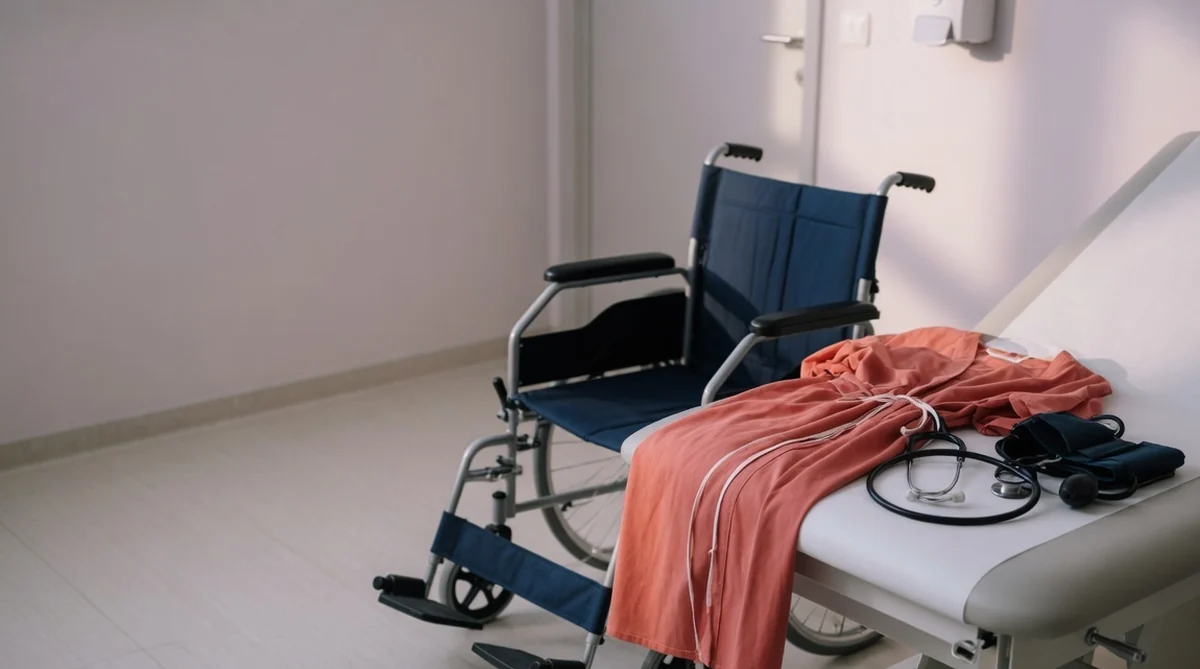
Healthcare Access 13 min read
Disability and women's healthcare access statistics: the screening, equipment, and maternal gaps that keep showing up
Women with disabilities are less likely to get mammograms and Pap tests, more likely to face inaccessible exam rooms, and in one NIH multi-hospital analysis faced 11 times the risk of maternal death. The equipment, training, and screening numbers in one place.

Healthcare Access 13 min read
Women physicians and the gender pay gap: why a majority pipeline still produces unequal pay
Women are 54.9% of U.S. medical students and 38.7% of active physicians, yet the adjusted physician pay gap returned to 26% in 2024. AAMC workforce data, Doximity compensation figures, and career-earnings research on specialty mix, leadership, full-professor rank, attrition, and burnout.

Healthcare Access 13 min read
Immigrant women's healthcare access statistics: uninsured rates, delayed prenatal care, and the chilling effect of enforcement
Nearly half of likely undocumented immigrant adults are uninsured. First-trimester prenatal care has fallen to 75.5% nationally. Language barriers, Emergency Medicaid for delivery, and chilling-effect research: the citable numbers in one place.
Evidence in your inbox.
Join 250,000+ women receiving our weekly breakdown of new research, policy changes, and health tools.